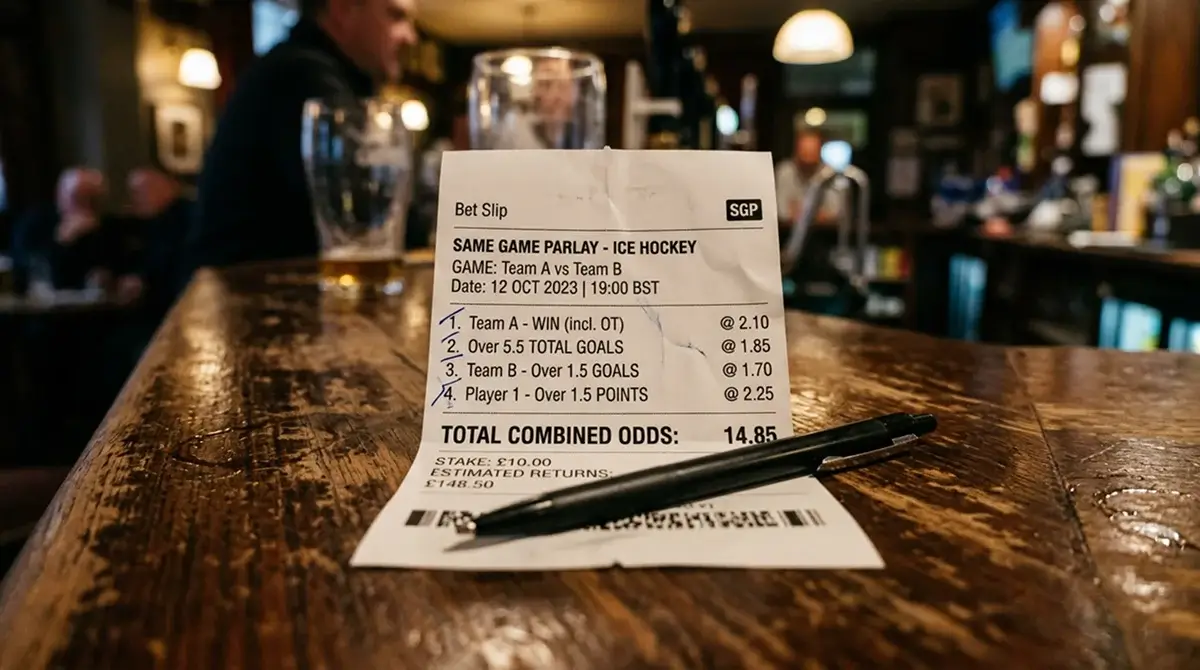
NHL Playoff Bracket Betting Guide
 Available in US
I made my best single hockey bet ever in April of a recent playoff cycle: a series-winner futures on what looked like a tough first-round underdog matchup with goaltending I trusted to steal games. It hit, paid handsomely, and reminded me why playoff bracket betting is my favourite stretch of the hockey calendar. Regular-season betting is a grind. Playoff betting is two months of compressed information, structural pricing inefficiencies, and matchup-driven value that recreational money rarely sees.
This guide is for UK punters who want to bet the Stanley Cup playoffs as a coherent betting product rather than a series of disconnected games. How the bracket structure shapes pricing, where series-winner markets misjudge matchups, and how to build a playoff approach that captures the value the format makes available.
Table of Contents
- The Structure That Defines the Format
- Series-Winner Markets and Implied Probabilities
- Round-One Dynamics
- Series-Length and Exact-Score Markets
- Goaltender Impact in Playoff Series
- Bracket Path and Compound Probability
- The Conference Finals and Cup Final
- Round-by-Round Bankroll Discipline
- What Playoff Bracket Betting Teaches
- Common Queries on Playoff Bracket Wagering
The Structure That Defines the Format
The Stanley Cup playoffs run through four best-of-seven rounds, beginning shortly after the 1,271-game regular season ends in April. The bracket is divisional in its early rounds — the top three teams from each division play each other in rounds one and two, with wild-card teams seeded into the brackets based on conference standings. Conference finals match the surviving divisional winners, and the Cup final brings together the Eastern and Western Conference champions.
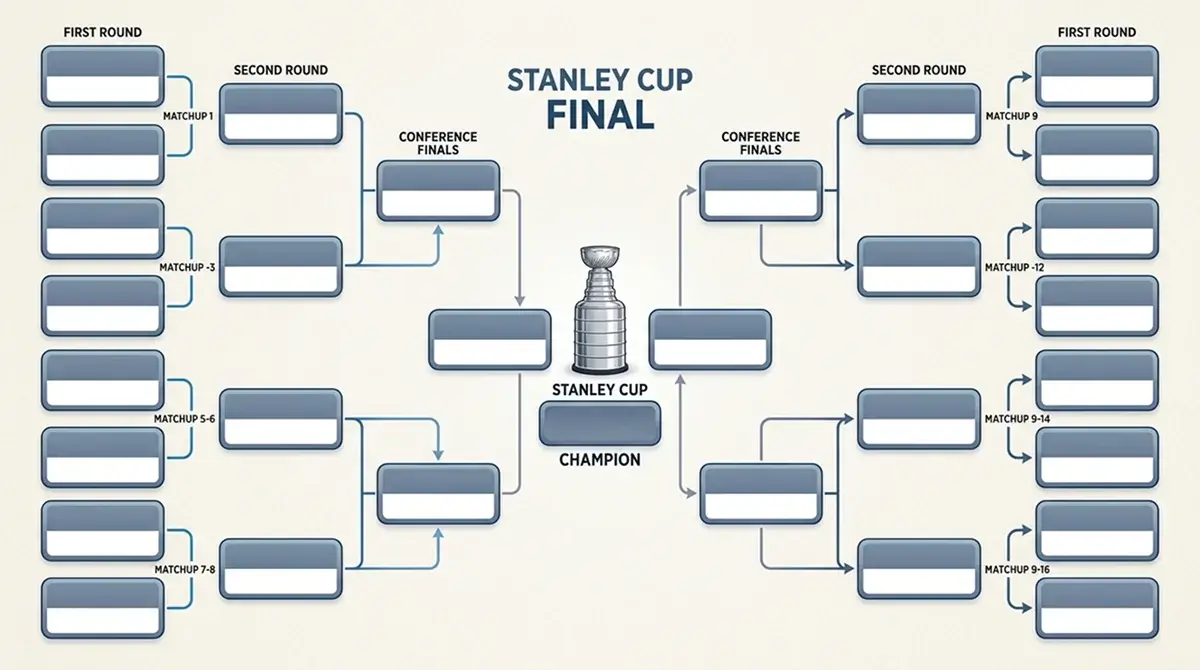
That structure produces predictable pricing dynamics. Round-one matchups feature divisional rivals who’ve played each other multiple times in the regular season, which means the data sample for projecting outcomes is meaningful. The market prices these matchups with some accuracy. Round-two matchups are still within divisions and within reasonable data samples. The conference finals introduce cross-divisional matchups with thinner regular-season head-to-head data, and the Cup final pairs teams that haven’t played each other competitively in over a year. The pricing efficiency declines as the bracket progresses, and the betting value usually moves in the opposite direction.
Series-Winner Markets and Implied Probabilities
The series-winner market is where most playoff bracket betting happens. A best-of-seven series is decided by whichever team wins four games first, with the winner advancing. The pricing reflects each team’s probability of winning the series, not any individual game, which produces meaningfully different odds from any game-by-game moneyline.
Where the market gets these prices broadly right: matchups between two clearly different-tier teams in round one. A 117-point division winner against an 88-point wild card carries a series-winner price around -300 or wider, which is close to the actual probability based on regular-season performance and head-to-head history. The favourite usually wins, and the market knows it.
Where the market frequently underprices the favourite: deep playoff series between similar-quality teams. A conference final between two 105-point teams might list one as a -130 favourite based on regular-season head-to-head metrics, when the actual probability is closer to 55-45. The narrower the implied probability gap, the more variance the bracket can introduce, and the more carefully the price needs to be examined.
Where it overprices the underdog: matchups where the underdog has elite goaltending against a favourite without elite goaltending. The 3% to 5% implied probability shift on starting-goalie changes documented by sportsbooks like Caesars compounds across a seven-game series. A goaltending advantage that’s worth 3% per game can be worth substantially more across the series because the underdog only needs to win four out of seven games, and the goaltending edge concentrates in tight games where it matters most.
Round-One Dynamics
Round one is where the public bets hardest and where the prices move most. Eight series running concurrently, 14 to 21 days of compressed playoff action, and a betting market trying to price all of it simultaneously while reacting to in-progress results.
What I look for in round-one analysis: goaltending matchup quality, specifically which team has the more reliable starting goaltender across a seven-game sample. Regular-season goaltending numbers stabilise around 1,500 to 2,000 shots faced, which is enough that a true read on each team’s goaltending heading into the playoffs should be available. The team with the better goaltending wins round-one series more often than the price suggests, particularly when the favourite team’s goaltending is the weaker side of the matchup.

The second factor is special teams. Teams with elite power plays and weak penalty kills can be exposed in disciplined playoff hockey, where penalty counts often drop and the special-teams advantage compresses. Teams with average power plays and elite penalty kills tend to outperform their regular-season profile in playoff series because their structural strength is the more durable one.
The third factor is matchup-specific history. Some teams genuinely match up well against specific opponents and badly against others, for stylistic reasons that don’t always show up in standard statistics. A team with strong forecheck pressure against a team with weak puck-moving defence is a meaningful advantage that the regular-season record between them often captures, but the market sometimes treats as noise.
Series-Length and Exact-Score Markets
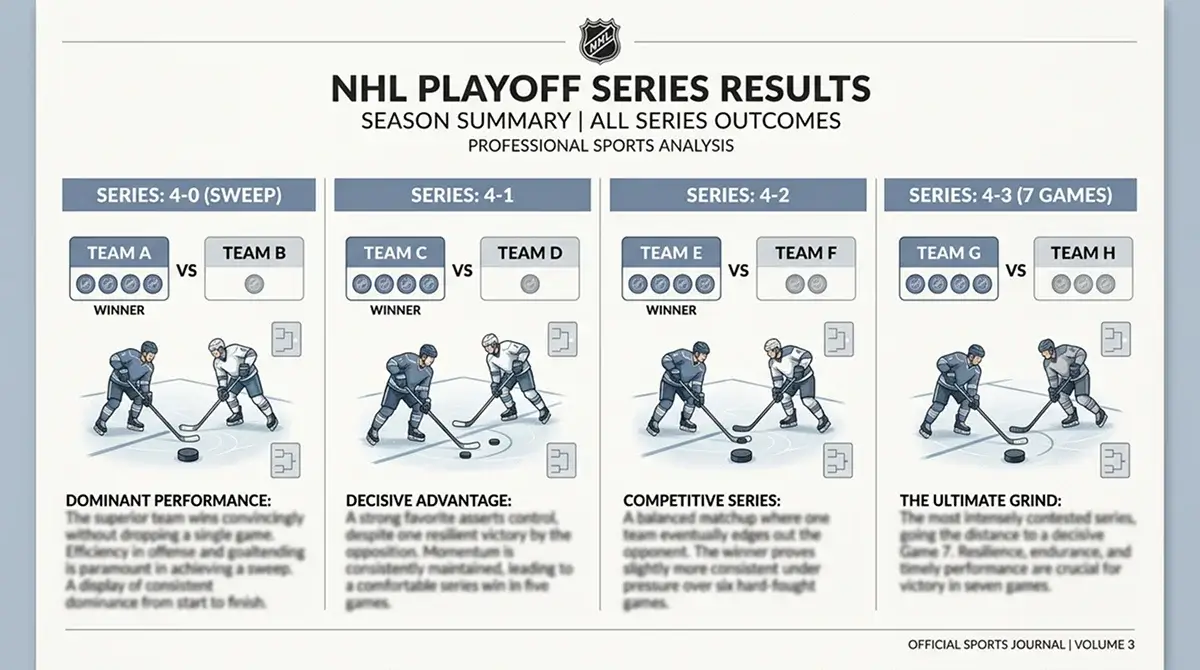
Beyond the binary series-winner bet, the playoff betting market offers series-length markets — predicting whether a series ends in 4, 5, 6 or 7 games — and exact series-score markets predicting specific outcomes like a 4-2 favourite win or a 4-1 underdog win.
Series-length markets are usually priced reasonably tightly, but the public bets them with a bias toward longer series. The “Game 7” narrative is more attractive to recreational money than the “4-0 sweep” narrative, even when the underlying matchup suggests a sweep is likely. Series-length unders on heavy favourites against badly-matched opponents have been profitable historically.
Exact series-score markets pay larger but require predicting both the winner and the length precisely. The expected-value math on exact series-score bets is usually less attractive than the headline odds suggest because the probability of any specific 4-3 or 4-2 outcome is genuinely low. Where these markets sometimes offer value: 4-1 wins for favourites, which are a more common series result than the public bets, and 4-3 wins for underdogs, which are the underdog series-winner outcome most often.
Goaltender Impact in Playoff Series
Goaltending decides more playoff series than any other variable. A hot goaltender can carry an underdog through three rounds. A cold goaltender can sink a favourite in the first round. The market knows this and prices it, but the magnitude of the effect is often understated when one team’s goalie enters the playoffs in elite form.
What I track heading into round one: each goalie’s last 20 starts, save percentage on high-danger shots, and consistency of starts across the previous month. A goalie with a hot recent stretch on top of a strong full-season sample is the most valuable bet driver in the playoffs. A goalie with a hot stretch built on a small sample is less reliable — the principles behind sample-size analysis covered in save percentage sample size apply directly here, because playoff series concentrate the importance of goaltending in 4-7 games.

The other goaltending consideration is tandem reliability. Teams that have used their starter for 70+ games heading into the playoffs sometimes show fatigue patterns in round two and beyond. Teams that rotated workload across two goalies enter the playoffs with depth options. Series outcomes can hinge on whether the favourite’s goalie can hold up across multiple rounds, and the market often doesn’t price fatigue patterns correctly.
Bracket Path and Compound Probability
Stanley Cup futures bet during the playoffs are exercises in compound probability. A team that’s already won round one and is favoured in round two still has to win two more series after that to lift the trophy. The bracket path matters as much as team quality.
Teams that win round one against tough opposition and then face an exhausted higher seed in round two often outperform their futures-price implied probability, because they’ve already played through their hardest matchup. Teams that win round one against weak opposition and then face fresh elite teams in round two are often overrated by the public, who anchor on the round-one win without accounting for the harder matchup ahead.

The 2023-24 Florida Panthers won the Stanley Cup with what was widely considered a favourable bracket path, demonstrating that bracket positioning compounds with team quality in ways pre-playoff futures pricing doesn’t always capture. Tracking the bracket as it unfolds and identifying which surviving teams have the easier path forward is one of the more profitable analytical activities of the playoff period.
The Conference Finals and Cup Final
By the conference finals, the betting market has tightened considerably. The remaining teams are usually the strongest of their conference, the regular-season data samples have been supplemented by two rounds of playoff hockey, and the pricing reflects everything available.
Where I look for value at this stage: totals markets, specifically unders on conference-final series where both teams have elite goaltending. Conference-final hockey often produces 2-1 and 1-0 games that the totals lines don’t fully anticipate. The averaged-down total for a series sometimes lags the actual goal distribution of medal-round hockey.
The Cup final itself is the hardest market to beat. Two months of playoff data are baked in, the public attention is at its highest, and the lines are sharply priced. Most of my profitable Cup-final betting has come from totals markets and series-length unders, not from outright winner predictions where the price reflects everything available.

Round-by-Round Bankroll Discipline
The playoffs reward bettors with discipline and punish those without. Two months of daily compressed action, emotional swings as series shift, and the temptation to chase a bad result with a bigger next bet — all of it conspires against the bettor who didn’t plan their playoff bankroll in advance.
My approach: allocate a specific playoff budget separate from regular-season bankroll, size individual bets conservatively (1 unit standard, 1.5 maximum), and treat each round as a fresh decision rather than a continuation of previous bets. Series winners that have already lost two games in their series should not be reinforced with additional bets to “average down” — that’s the most expensive mistake playoff bettors make.
The bettors who finish playoffs ahead of the bank are the ones who skipped fixtures they didn’t have strong reads on, accepted that some series outcomes are partly random, and didn’t chase. Playoff betting is genuinely profitable when approached with that mindset and ruinous when approached as a six-week emotional sprint.
What Playoff Bracket Betting Teaches
If you bet a full playoff cycle seriously, you’ll learn more about hockey betting in eight weeks than you’ll learn in eight months of regular-season grinding. Every analytical concept — goaltender stabilisation, matchup-specific reads, series-length probabilities, bracket-path compounding — gets tested in tight game samples with maximum information density. The lessons stick because they’re learned under pressure.
Treat the playoffs as your annual master class in hockey betting. Track every bet. Review every series outcome. Identify what your reads got right and what they got wrong. The bettor who emerges from playoffs each year with honest self-assessment is the one who improves over multiple seasons rather than just running hot and cold.
Common Queries on Playoff Bracket Wagering
Series-winner bets pay out only when the team wins four games in the best-of-seven series. Game-by-game moneylines settle on each individual game. Series prices reflect compounded probability across multiple games; game prices reflect single-match likelihood. They occur regularly. Wild-card teams reaching the second round or beyond is common enough that round-one underdog bets at fair prices can be value, particularly when goaltending or special teams favour the lower seed. Allocate a playoff-specific budget separate from regular-season bankroll, size individual bets conservatively, and avoid chasing losses across series. The compressed format creates temptation to bet more often than analysis supports, which is the most common bankroll mistake.What is the difference between series-winner and game-by-game betting in playoffs?
Are first-round upsets common in NHL playoffs?
How should UK bettors manage bankroll across the eight-week playoff window?
Written by the editors at ice Hockey Betting.