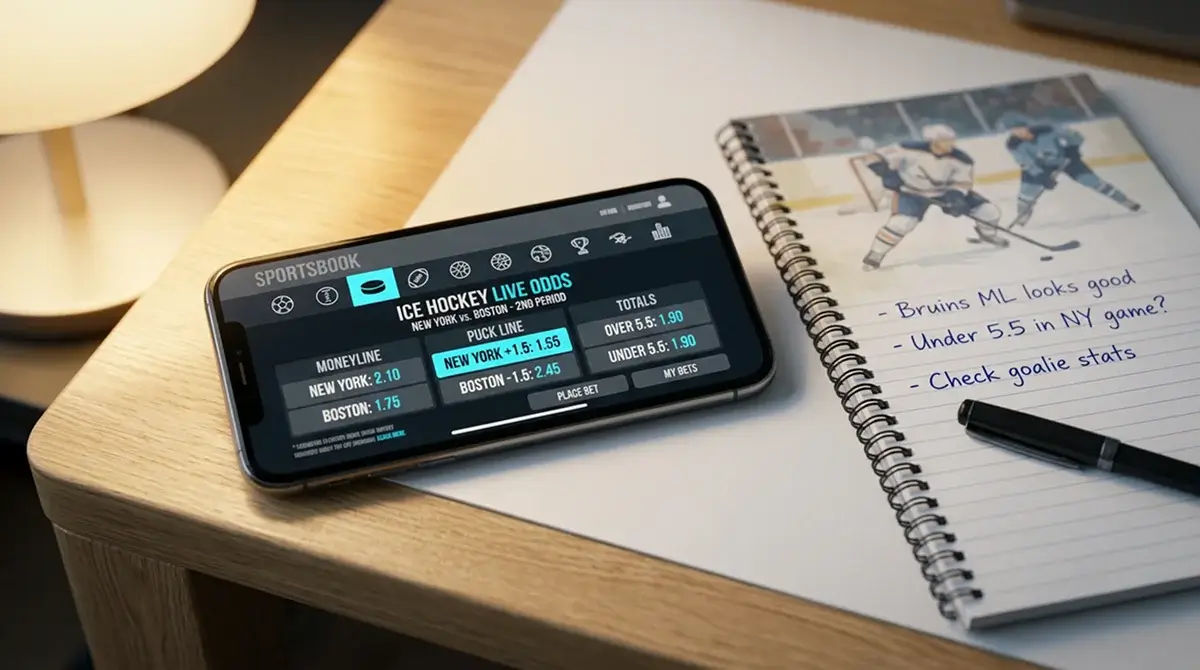
International Ice Hockey Tournament Betting Guide
 Available in US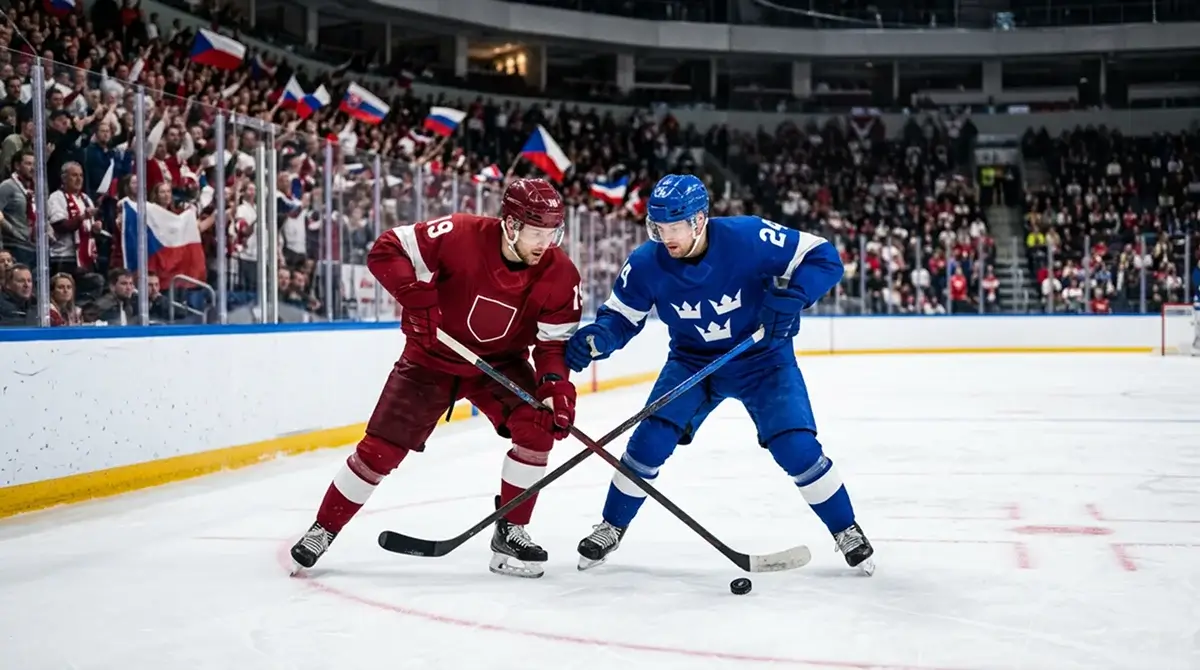
Table of Contents
- The Tournaments Most UK Punters Have Never Properly Priced
- The Global Footprint of Ice Hockey
- The IIHF World Championship
- Olympic Hockey
- The 4 Nations Face-Off and the Return of Best-on-Best
- The European Pro Leagues
- Tournament Format Quirks That Affect Your Bet
- UK Availability and Timing
- Treating Tournament Betting as Its Own Discipline
- Common Questions UK International Hockey Bettors Ask
The Tournaments Most UK Punters Have Never Properly Priced
I once placed a perfectly reasonable IIHF World Championship futures bet on Finland six weeks before the tournament started, then watched the price drift the other way for a fortnight before stabilising at exactly where I had got in. It taught me two things at once. First, international hockey markets do not behave like NHL markets, even when many of the same players are on the ice. Second, the UK is one of the better seats in the house to bet them, because the audience here is small enough that the books cannot rely on local volume to firm up their pricing the way they can on Premier League football.
Great Britain’s men sit seventeenth in the IIHF world rankings as of May 2025, with the women’s side at nineteenth. Ice Hockey UK has been a member of the international federation since November 1908, which makes British hockey older than most of the leagues you might bet on. That long membership has not produced regular betting markets on the GB national team, but it does mean the British public follows international hockey with a quiet steadiness that surfaces every spring during the IIHF World Championship.
This guide is the one I would have wanted before I started betting tournaments seriously. It walks through the major international events — the IIHF Worlds, Olympic hockey, the 4 Nations Face-Off, the major European pro leagues — and explains how their markets behave for UK punters. Tournament betting is its own discipline, and the bettors who succeed at it tend to treat each event on its own terms rather than as a stretched version of the regular season they already know.
The Global Footprint of Ice Hockey
The first thing to register about international ice hockey is how unevenly distributed it is. USA Hockey logged over 640,000 registered players in the 2024-25 season, and Hockey Canada had over 550,000 active members across the same window. The IIHF counts more than 1.8 million registered players globally in over eighty countries. Two of those eighty produce more than half of all registered hockey players in the world. The implication is that international tournaments are almost always a question of which of the top six or seven nations will outperform their seeding, rather than a genuinely open field.
The economic footprint follows the same shape. The global ice hockey equipment market was valued at $2.30 billion in 2024, with forecasts pointing to $3.13 billion by 2030 at a compound annual growth rate of 6.3 per cent. North America accounts for 63.3 per cent of that revenue. When you are looking at IIHF rankings, Olympic medal possibilities or futures odds for any of the European pro leagues, that revenue concentration is the underlying gravity. The countries with the deepest player pools and the most equipment-buying audiences also produce the deepest national-team rosters.
For a UK punter, this matters in two practical ways. First, it explains why the same three or four teams — Canada, the United States, Finland, Sweden — keep appearing at the top of futures markets year after year. Second, it explains why international hockey markets tend to be tighter on those favourites than NHL or EIHL markets are on their league favourites. The pricing inefficiency in international hockey lives in the middle of the bracket rather than at the top.
That middle-of-the-bracket pocket is what makes tournament betting interesting from a UK desk. Countries ranked five through ten in any given tournament — Czech Republic, Switzerland, Germany, Slovakia and Latvia — produce more volatile match results than their seedings suggest, and the books struggle to price those games with the precision they bring to top-of-the-table fixtures.

The IIHF World Championship
The IIHF World Championship is the most reliably bettable international hockey event on the calendar. It runs every May, hosted at two arenas across two cities (sometimes in two countries), with sixteen national teams split into two groups of eight for a round-robin followed by a quarter-final knockout. The tournament is genuinely annual, with no rest year, which means UK books open markets for it every season.
The scale is worth understanding. The 2024 IIHF World Championship in the Czech Republic became the most attended in history, drawing 797,727 spectators across 64 matches at an average of 12,464 per game. The 2025 tournament in Stockholm and Herning, played from 9 to 25 May, drew 489,450 spectators at an average of 7,648 per match — a smaller raw figure that reflects venue capacity rather than declining interest. The United States won that 2025 edition for their third title. Those numbers tell you the Worlds is a serious commercial product even in a non-Olympic year, which is why UK books treat it more like a major tournament than as a long curiosity.
Bruno Marty, who led ProSports at Infront — the long-time commercial partner of the IIHF — once put the federation’s working philosophy plainly: “The aim with the IIHF Ice Hockey World Championship is the same every year — build and improve on what we have done previously and set a new standard.” That mindset is visible in the tournament’s growth across the last decade, both in attendance and in the markets the books open around it. Pre-tournament gold-medal futures, group-winner side bets, group-stage match prices and full prop coverage on the knockout matches are now standard at the larger UK books.
From a betting standpoint, the most useful structural quirk of the Worlds is the NHL participation question. Because the tournament runs concurrent with the NHL playoffs, teams whose NHL players are eliminated early in the playoffs gain a roster advantage as those players become available mid-tournament. That introduces a lumpy injection of talent that the books often re-price awkwardly, and patient bettors who track which countries have which players still available can find genuine in-tournament value. The deeper structural elements of how this tournament prices — gold-medal futures windows, group-stage edges, the GB storyline — sit in our guide to IIHF World Championship betting.
Olympic Hockey
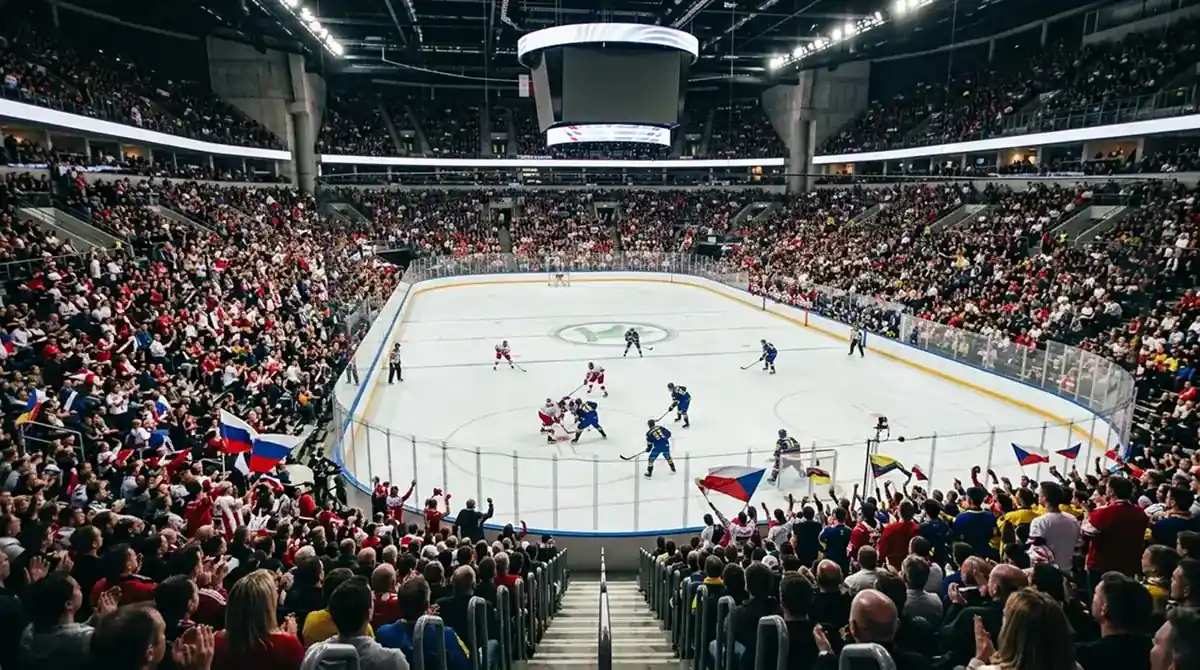
Olympic hockey is the most prestigious event on the international calendar and the one that puts UK betting markets through their oddest contortions. It runs once every four years in February, embedded inside the Winter Olympics, with twelve national teams in the men’s tournament and ten in the women’s. The format is a short round-robin followed by a knockout, which compresses the entire event into roughly two weeks of competitive play.
The defining variable for Olympic hockey betting is NHL participation. When the NHL releases its players for the Olympics, the tournament becomes a best-on-best showcase and the favourites at the top of the futures market are essentially the same group that would compete in a 4 Nations or World Cup of Hockey — Canada, USA, Sweden, Finland and Russia (when eligible). When the NHL declines to release its players, as has happened in several recent cycles, the tournament becomes a mix of European pros and second-tier North American talent, and the futures market widens significantly with a different set of favourites.
That participation question creates a peculiar betting dynamic at UK books. Pre-tournament Olympic gold-medal futures often go up before the NHL participation decision is final, and the early prices can shift dramatically once the decision is announced. Sharp bettors monitor the announcement timeline carefully because a late confirmation can move the gold-medal favourite’s price by twenty per cent in either direction.
The ice itself is a secondary factor worth knowing about. Olympic men’s hockey is played on international-sized ice — wider than NHL rinks, with more space behind the nets — and the tactical implications skew scoring lower than NHL averages. Totals lines reflect this. A typical Olympic men’s totals line sits in the low fives, against NHL totals that cluster around six. Bettors who carry NHL totals intuition into Olympic markets without adjusting for the larger surface tend to lose on overs.
For a UK punter, the practical guidance is to wait for participation clarity before betting Olympic futures with any size, and to treat in-tournament group-stage games as the soundest betting opportunity because by that point the rosters are fixed and the books can be properly compared.
The 4 Nations Face-Off and the Return of Best-on-Best
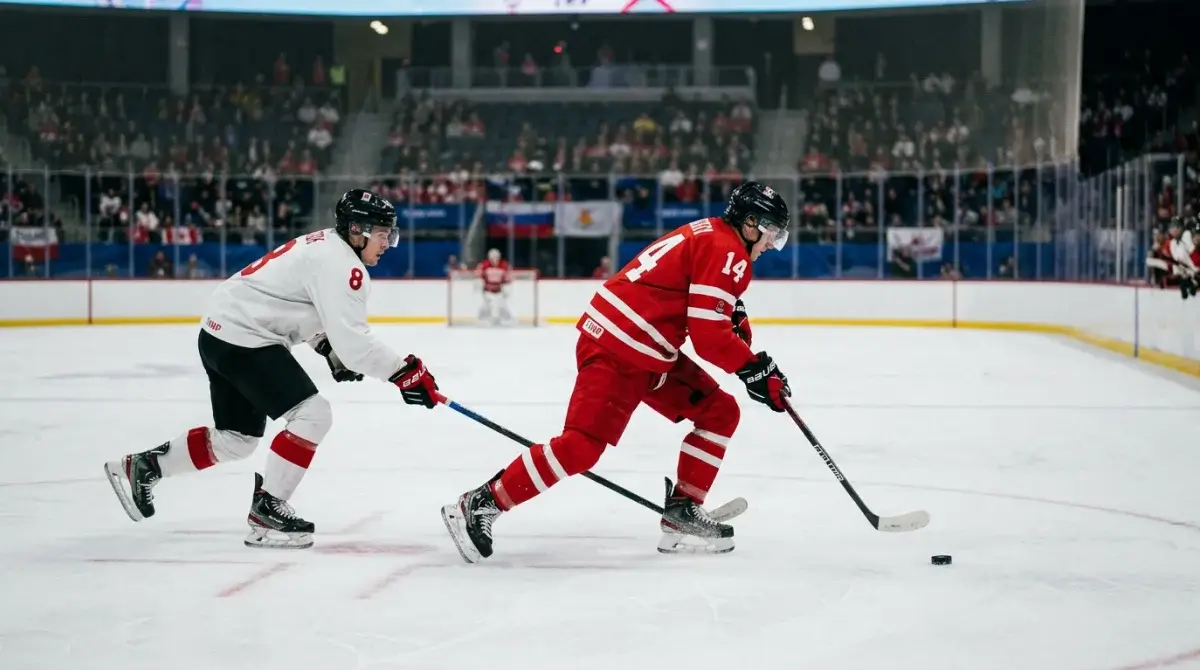
The 4 Nations Face-Off was the NHL’s solution to a problem it had been wrestling with for years — how to deliver best-on-best international hockey without committing to a full World Cup of Hockey. The format is exactly what the name implies. Four nations — Canada, USA, Sweden and Finland — playing a round-robin followed by a final. The first edition in February 2025 was treated by both players and audiences as serious competitive hockey rather than as an exhibition, which is what made it worth betting.
Roster-driven pricing is the dominant feature of a 4 Nations market. With only four national teams and only NHL-eligible players available, the rosters are essentially knowable in advance. That makes pre-tournament futures pricing more efficient than at most international events because the books are not guessing at roster construction. The pricing edge for bettors lives in two places: late-roster injuries, where the books are slow to repost prices for a confirmed scratch, and in-tournament momentum where short-format prices can lag actual on-ice performance by a game or two.
From a UK betting perspective, the 4 Nations also occupies a useful slot on the calendar. It runs in February, halfway through the NHL regular season, when both the NHL and the EIHL are mid-stride. That means it does not displace your regular betting routine — it slots in alongside it for two weeks. UK books open futures markets in the weeks before the event and offer full match-winner, totals and selected prop coverage for each game.
One pricing quirk worth flagging: short-tournament goaltender rotations are different from regular-season ones. In a four-game round-robin plus a final, a team will typically use no more than two starts from its second-string goalie, which means the implied-probability swing on a confirmed backup start is sharper than the season-long average. UK bettors who track confirmed-starter news on the morning of each game can capture meaningful edge here, particularly on games where the second-string goalie was not the pre-tournament expectation.

The European Pro Leagues
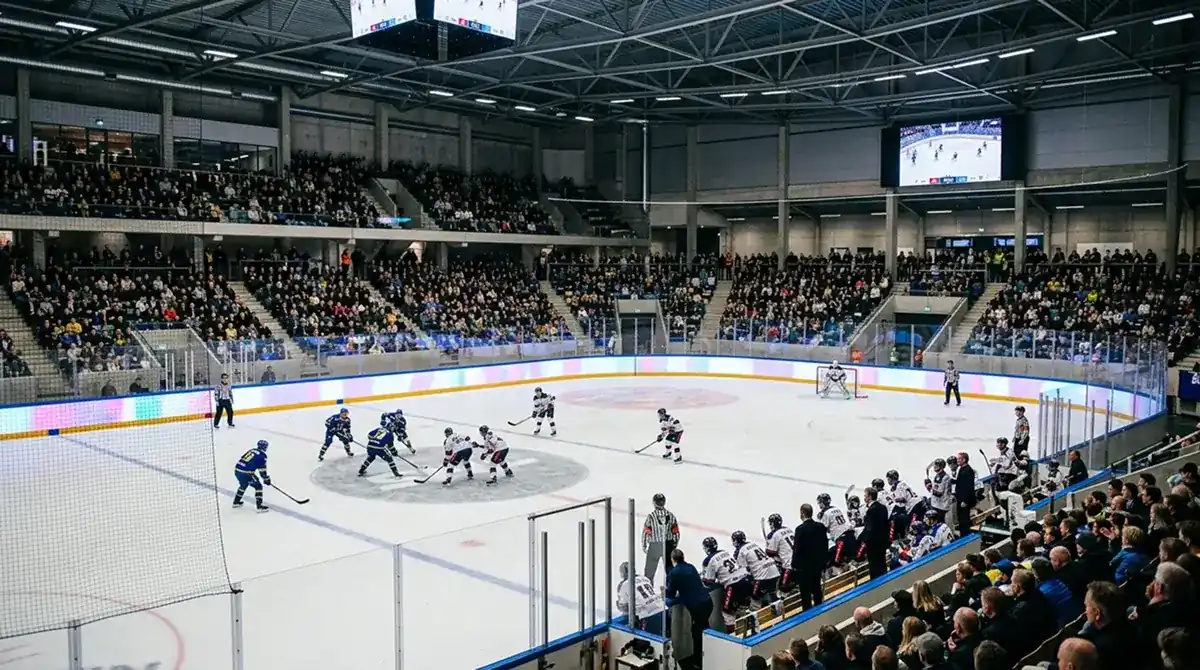
European professional hockey runs roughly parallel to the NHL season, with the major leagues — the SHL in Sweden, Liiga in Finland, the DEL in Germany, the Czech Extraliga, the Swiss National League, and Russia’s KHL — each running their own regular-season schedule from September to early April followed by playoff brackets. UK books carry varying levels of coverage across these leagues, with the SHL and DEL typically getting the deepest treatment because of established European-facing pricing operations within several major book groups.
The styles of play vary, and that variance translates into pricing implications. The SHL is known for structured, disciplined play with lower goal totals than the NHL. Liiga is even more defensively oriented, with totals lines that often settle below five goals. The DEL is more open, with higher-scoring games and more volatility in individual match outcomes. The Czech Extraliga and Swiss National League sit somewhere in between. The KHL plays a longer-route game with significant Russian-school individual skill on display, and the totals trend higher than the European average.
Cross-league play through the Champions Hockey League — a Europe-wide club tournament played alongside the league seasons — is where things get interesting. The CHL puts clubs from each major European league into a group stage followed by knockouts, and the cross-league style clashes produce variance that the books struggle to price consistently. A Swedish club known for defensive discipline meeting a Czech club known for offensive flair produces totals lines that are often soft in one direction or the other.
For a UK punter, the European pro leagues offer a different kind of betting calendar from the NHL. The volume is lower, the juice is wider, and the line shopping potential is higher. UK books that take seriously a European audience tend to open SHL and DEL markets a day or two ahead of puck drop, with Liiga and the Swiss National League often opening only on the morning of the game. Patient research and a willingness to bet midweek games can produce a sustainable edge here, particularly across the November-to-February window when European audiences and books are both fully engaged.
Tournament Format Quirks That Affect Your Bet
Every tournament has structural features that affect how its markets price, and the international hockey calendar is a particularly good showcase of those features. The IIHF tiebreaker rules deserve a paragraph on their own. When two teams finish a group stage tied on points, the IIHF uses head-to-head result first, then goal differential against tied teams, then goal differential overall, then a series of further criteria. That tiebreaker structure means that a single late goal in a late group-stage game can shift the entire knockout bracket, with futures implications that propagate through the rest of the tournament.
Olympic and 4 Nations tournaments use simpler structures but introduce their own quirks. Olympic men’s hockey runs a preliminary round followed by a one-game knockout with reseeding. The 4 Nations is a four-team round-robin followed by a single final. Both formats compress decision-making into short windows where a single loss can eliminate a team from medal contention, which makes in-tournament game-by-game variance betting more interesting than long-form futures betting.
Overtime and shootout rules vary across tournaments in ways that affect graded markets. IIHF tournament play uses three-on-three overtime followed by a shootout in group games, with extended overtime in knockout games. NHL playoff rules use five-on-five overtime until a goal is scored. Olympic and 4 Nations formats blend these depending on the stage. Always confirm with the specific book how a regulation-time market is graded for a given tournament, because the rules vary in ways that matter at settlement.
One last format quirk: roster sizes. International tournaments allow rosters of around twenty-five players plus goaltenders, against NHL active rosters of twenty-three. That extra depth means in-tournament injury news matters slightly less for top countries than it would in a regular NHL game, because the replacements come from a deeper pool of national-team-eligible talent.
UK Availability and Timing
Where you watch the games matters because what you see and when you see it determines what you can bet with confidence. The IIHF World Championship is broadcast in the UK on the IIHF’s own streaming platform IIHF.tv, with selected matches picked up by sports broadcasters depending on the British involvement and the tournament partnership of that year. Olympic hockey is part of the BBC and Eurosport Winter Olympics coverage, with comprehensive multi-game access.
The 4 Nations Face-Off and any future best-on-best NHL-led tournaments will follow the NHL’s broadcasting arrangements, which means Premier Sports in the UK alongside selected NHL+ streaming options. European pro leagues vary considerably. SHL games are streamed through the SHL’s own platform; Liiga has a Finnish-facing service that is reachable from the UK; the DEL streams through a German service; the KHL has its own English-language platform.
Timing is the dominant practical issue. The IIHF World Championship runs on European time, which means most games are in the UK afternoon and evening — the easiest international tournament to follow live. Olympic hockey timing depends on the host city; an East Asian Olympics produces overnight UK windows similar to NHL Western Conference games, while a European or North American host city produces more accessible scheduling. The 4 Nations runs on North American evenings, putting most games in UK overnight windows. European pro leagues run on European evening time, which is mid-evening UK time for SHL, Liiga, DEL and CHL games.
For a UK bettor, the practical workflow is to lean into the IIHF Worlds and Olympic windows where live viewing aligns with European broadcast schedules, and to treat the 4 Nations and NHL-led international events more like NHL betting — with pre-game research carrying more weight than live-betting opportunities.

Treating Tournament Betting as Its Own Discipline
The bettors I know who have consistently profited from international hockey treat each tournament as a separate project rather than as an extension of their NHL or EIHL work. The format quirks, the roster construction, the broadcast windows, the audience profile — each of those differs by event in ways that change what the books are willing to price and where the soft pockets sit. A bettor who builds an annual rhythm around the May IIHF Worlds, the four-yearly Olympic window, the developing best-on-best NHL-led calendar, and a steady drumbeat of European pro league fixtures is betting into the deepest collection of international hockey markets the UK industry has ever offered.
Common Questions UK International Hockey Bettors Ask
International hockey betting raises a different set of questions from league betting, and the same few come up in every conversation I have with UK punters expanding into the tournament calendar.
How is the IIHF tiebreaker for group stage resolved, and why does it move betting lines?
The IIHF uses head-to-head result first, then goal differential against tied teams, then goal differential overall, with further criteria below that. Because a single late group-stage goal can change the order of finish and therefore the quarter-final matchups, futures markets and group-winner side bets can move sharply on apparently minor in-game results. Bettors who follow group standings through the late stages can sometimes capture edge ahead of the books re-pricing the bracket.
Why are Olympic hockey markets sometimes pulled by UK sportsbooks ahead of the tournament?
Most often because the NHL participation decision has changed or remains unconfirmed close to the event. When the books cannot price with confidence which players will be available, they will pull markets rather than carry the risk of having to settle at materially wrong prices. Markets typically return once participation is officially confirmed, sometimes with substantially different opening prices.
Does NHL participation change the price of an Olympic gold medal future?
Significantly. When NHL players participate, Canada, the United States, Sweden, Finland and Russia (where eligible) cluster at the top of the futures board at relatively short prices. When the NHL declines to release players, the field opens up considerably — KHL and European pro league players become decisive, the favourites lengthen, and middle-tier nations become more genuinely competitive. The same Canada gold-medal future can price anywhere from +180 to +350 depending on participation.
Which UK sportsbooks consistently price European pro league regular-season matches?
The larger UKGC-licensed books with established European-facing operations carry SHL and DEL coverage most consistently, with Liiga and the Swiss National League appearing on selected games. Smaller books focus their European hockey coverage on the Champions Hockey League and major playoff windows. The honest reality is that no UK book covers the European pro leagues with NHL-equivalent depth, but two or three books between them will price most games of interest.
Written by the editors at ice Hockey Betting.