IIHF World Championship Betting Guide
 Available in US
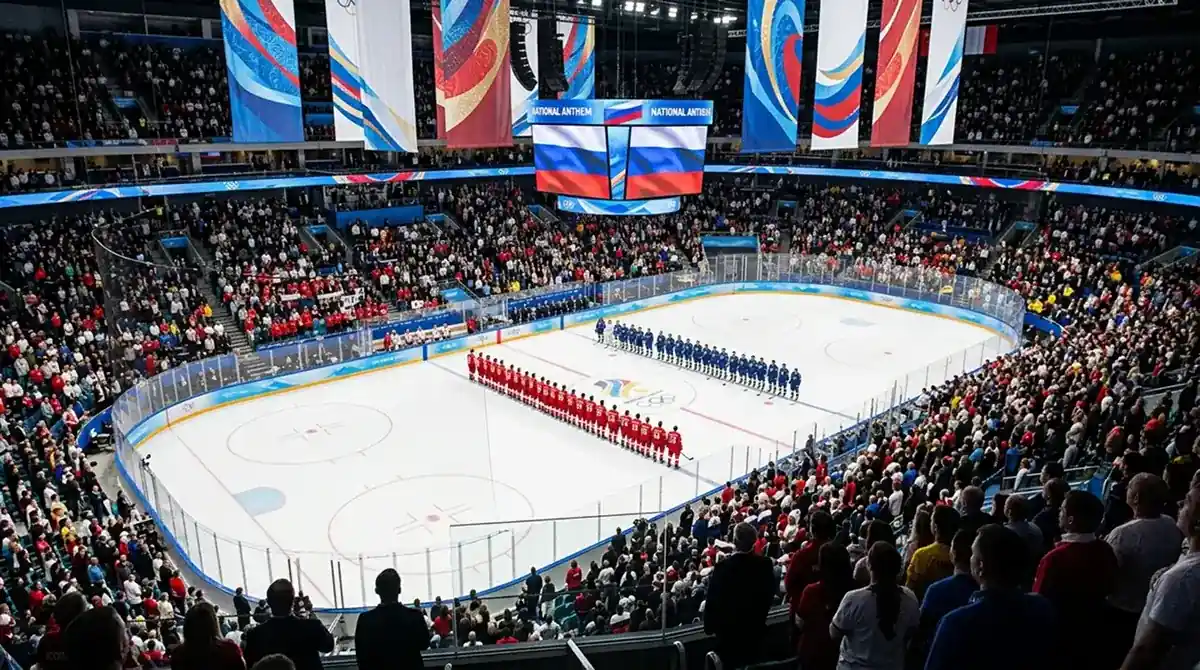
The IIHF World Championship is the tournament I bet most carefully and most enjoyably. It runs every May, just after the NHL playoffs have eliminated most of the world’s best players from availability, and it produces a kind of hockey that’s unlike anything else in the calendar — high-end European skill, mixed NHL contingents, group-stage chaos and medal-round tension compressed into two weeks. The pricing is its own challenge: a roster game more than a team game, with line movements that can swing dramatically as confirmed rosters drop the day before opening puck drop.
This guide is for UK punters who want to bet the Worlds with a clear understanding of what the tournament is, what it isn’t, and where the markets reliably misjudge it.
Table of Contents
- What the World Championship Actually Delivers
- The Pricing Challenge
- Group Stage Patterns
- Goaltending: The Tournament-Defining Variable
- Knockout Round Dynamics
- Information Flow for UK Bettors
- Markets Worth Playing, Markets to Skip
- Reading the Tournament As It Unfolds
- What the Worlds Teaches About International Hockey Betting
- Common Queries on World Championship Betting
What the World Championship Actually Delivers
The IIHF World Championship is the annual senior men’s world championship organised by the International Ice Hockey Federation. The 2025 edition was held in Sweden and Denmark; the 2026 edition runs in Switzerland. The tournament features 16 nations divided into two groups of eight, with each group playing a round-robin in a single city. The top four teams from each group advance to the quarterfinals, with single-elimination format through the gold medal final.
The roster reality is what shapes everything. NHL players whose teams missed the playoffs are eligible to join their national teams for the tournament. Players whose teams are still alive in the Stanley Cup playoffs are not. This means the strongest hockey nations — Canada, the United States, Sweden, Finland — assemble their rosters in waves as NHL teams get eliminated, with players arriving mid-tournament and lineups shifting from game to game.
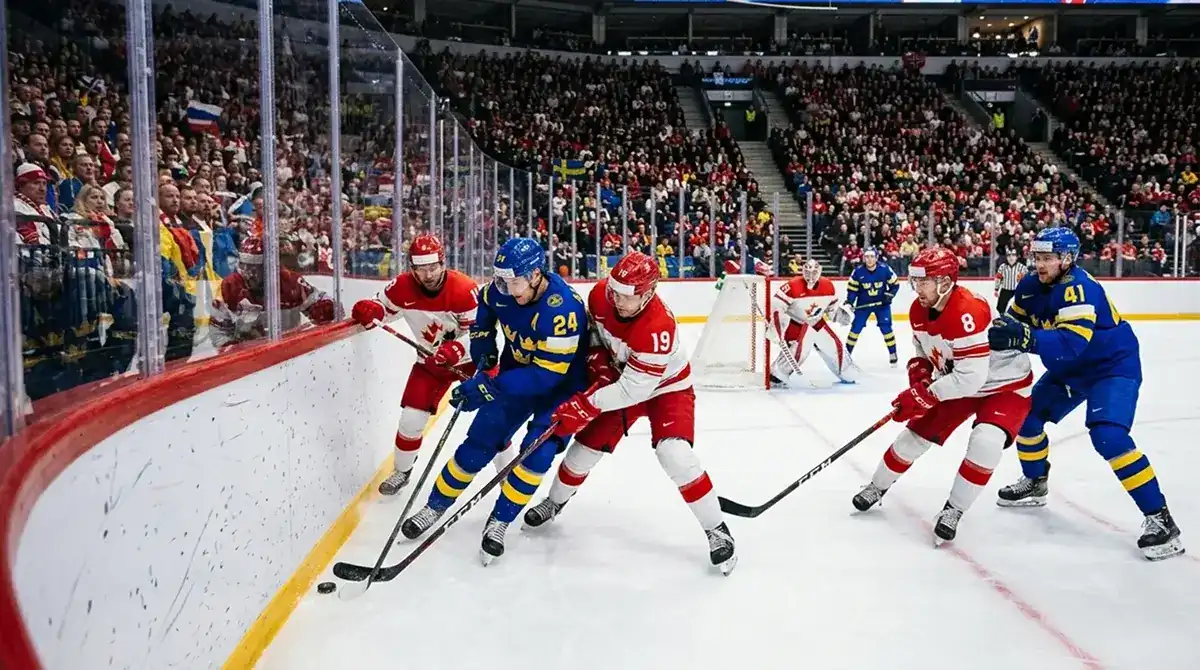
For betting, that creates a roster volatility that doesn’t exist anywhere else in the sport. The Canada that opens the tournament against Latvia is not the Canada that plays the United States in a semifinal, because three rounds of NHL playoff eliminations will have happened in between, potentially adding several first-line scorers and a starting goaltender to the roster.
The Pricing Challenge
Bookmakers face an unusually hard pricing problem at the Worlds. Pre-tournament futures are set based on probable rosters, but those probable rosters change by the day during the early group stage as NHL playoff results filter through. Group-stage moneylines have to be priced without knowing exactly which version of each team is showing up.
The structural inefficiency this produces: tournament-winner futures often shift dramatically in the first week, as confirmed roster additions clarify the picture. UK bettors who follow NHL playoffs closely have a real information edge here — knowing which players are likely to join their national teams based on NHL playoff results, and pricing tournament outcomes ahead of the market reflecting that information.
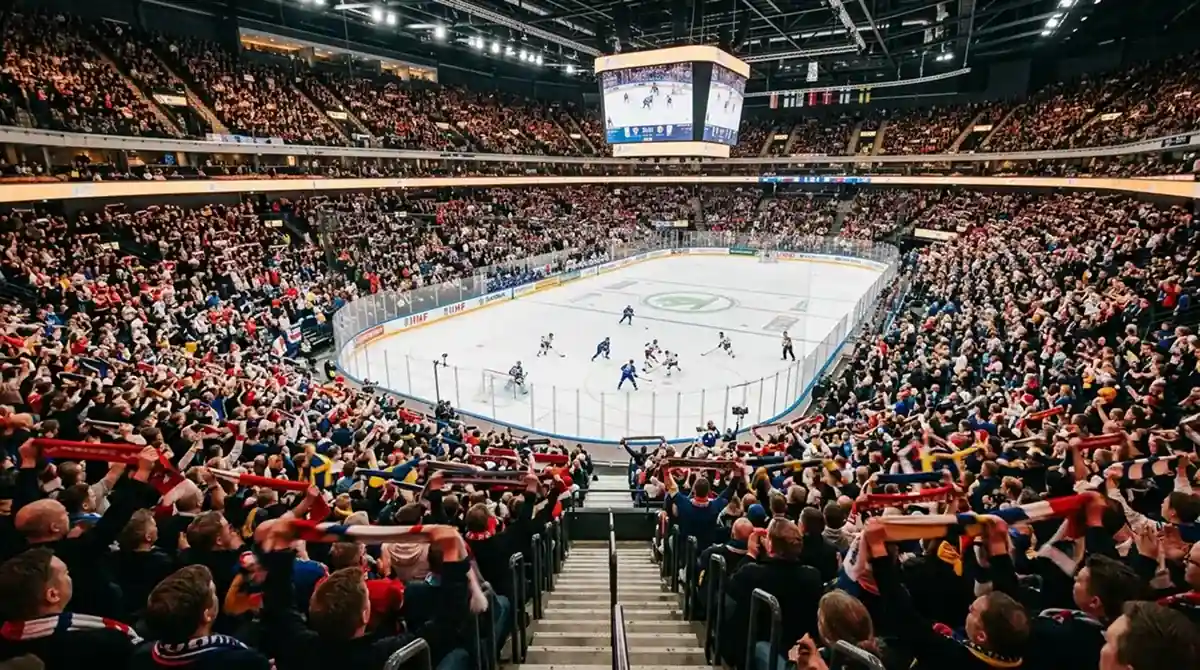
Group-stage moneylines for matches involving Canada or the USA are notoriously volatile. The opening line is priced for a generic best-on-best North American roster, but the actual roster for a Monday group-stage match against a lower-tier opponent might be the depth version of the team with most of the NHL stars not yet arrived. The line should reflect that, and often does, but the adjustment timing varies between books.
Group Stage Patterns
The IIHF group stage produces some of the most exploitable mismatches in hockey. The 16-team field includes nations like Latvia, Norway, France, Hungary and Austria — competitive teams against each other, but heavily outclassed by the top six or seven hockey nations. Moneylines on those mismatched fixtures can hit -2000 or wider, which puts them outside the practical betting range.
Where group-stage value lives: in the totals and puck-line markets on mismatches, and in moneylines on tighter matchups between teams of similar pedigree. A Switzerland vs Czechia group-stage match is genuinely a coin flip on most days, and the pricing reflects that with real betting interest on both sides.

Puck-line betting in group-stage mismatches is the most accessible market for UK punters. Standard puck lines run +/-1.5 goals, but at the Worlds the books often offer +/-2.5 or +/-3.5 lines specifically because the talent gaps produce blowouts. The principles behind puck line betting apply more importantly here than in regular NHL play, because the spreads are wider and the value calculations more complex.
Goaltending: The Tournament-Defining Variable
If there’s one factor that decides medal-round World Championship games more than any other, it’s goaltending. Tournament hockey produces low-event medal-round matches where one timely save defines the result, and the goaltender carousel between nations adds another layer of uncertainty to the price.
The 3% to 5% implied probability shift that sportsbooks like Caesars apply to NHL starting-goalie changes plays out at the Worlds, but with one tournament-specific complication: nations sometimes start their second-string goalie in early group-stage games to save their starter for tougher matchups. That’s a coaching decision rather than an injury or rest situation, and the market often doesn’t react cleanly because the change isn’t framed in the language books are used to processing.
What I look for in pre-game research: confirmed starting goalie from each nation’s official channels, ideally posted 60 to 90 minutes before puck drop. The lag between confirmation and price adjustment at UK books is where the bet sits.

Knockout Round Dynamics
Once the tournament reaches the quarterfinals, everything tightens. Defensive systems clamp down, special teams matter more, and one bad shift can end a tournament for a nation that’s looked dominant in the group stage. The pricing recognises this — knockout-round moneylines are tighter and totals lines drop relative to group-stage equivalents — but the recognition isn’t always complete.
Where I’ve found value in knockout rounds: totals on matches involving two structured European nations. Sweden vs Finland, Czechia vs Switzerland, Germany vs USA — these matchups produce low-event hockey that often lands under the posted total even when the line has already been shaded down from group-stage averages. The under bias documented in NHL totals research by Woodland and Woodland reverses at the Worlds in interesting ways — totals are usually priced sharply, but the under often still wins on knockout-round defensive hockey.
Moneylines in knockout rounds are tighter and harder to beat. The futures market on tournament winner often offers better value once the quarterfinal bracket is set, particularly if a dark horse has emerged through the group stage with a favourable knockout path.
Information Flow for UK Bettors
The Worlds get reasonable English-language coverage through the IIHF’s own channels, the participating national federations, and a handful of dedicated international hockey journalists who work the tournament every May. Twitter remains the fastest way to catch roster news and lineup confirmations. The IIHF website carries match centres and basic statistics in English.

What’s harder to find: the kind of analytical depth that NHL betting research has built up over decades. Expected-goals models exist for international hockey but the data is sparser and less reliable than NHL equivalents. Don’t try to import NHL analytical frameworks wholesale — the sample sizes don’t support it.
What works better: focused attention on rosters, recent form, and goaltender selection. Watch the games. The tournament rewards bettors who actually see the hockey rather than relying purely on statistical models built for different conditions.
Markets Worth Playing, Markets to Skip
The Worlds markets that have worked for me consistently: tournament-winner futures bet in the first three days after rosters are confirmed; group-stage puck lines on mismatched fixtures; goaltender save totals on group-stage games involving shot-volume teams; and knockout-round totals on matches between two structured European sides.
Markets I treat carefully: live betting on Worlds games, because UK book pricing lags badly behind actual game state. Same-game parlays involving multiple Worlds fixtures, where the correlation between game outcomes is higher than the parlay price suggests. Player props on third-line forwards, where tournament ice time distribution is unpredictable and concentrates more heavily on top lines than NHL norms.
The size of bets should be conservative. Liquidity at UK books for IIHF World Championship markets is decent for top fixtures but thin for everything else. A bet that wouldn’t move an NHL line will move a Worlds line, particularly on niche markets. Plan stake sizes accordingly and don’t expect to scale up the way you would on domestic markets.
Reading the Tournament As It Unfolds
The IIHF Worlds reward bettors who treat it as a developing narrative rather than a static slate of independent games. Day-by-day, the tournament shapes itself as rosters consolidate and group-stage results reveal which teams are actually playing to their seedings. The futures market adjusts in waves, and the windows for value open and close quickly.
The discipline that pays at the Worlds is the same discipline that pays anywhere else in hockey betting: defined bankroll plan, conservative unit sizing, honest tracking of results, and patient willingness to skip fixtures that don’t offer clear edges. Tournament betting amplifies both the highs and the lows because the format compresses everything into two weeks. The bettors who survive May with their bank intact are the ones who didn’t try to bet every game.
What the Worlds Teaches About International Hockey Betting
If you bet the IIHF World Championship seriously for two or three editions, you’ll learn more about international hockey pricing than from any other tournament. The roster volatility, the format pressure, the medal-round defensive tightening — all of it teaches reads that transfer to the Olympics, the 4 Nations Face-Off, and any future best-on-best events. Treat the Worlds as your annual graduate course in international hockey betting, and the tournament earns its place in the calendar.
Common Queries on World Championship Betting
The men’s World Championship runs annually in May, beginning shortly after the NHL regular season ends and running roughly two weeks. Specific dates and host nations are confirmed by the IIHF in advance of each edition. Players whose teams are still alive in the NHL Stanley Cup playoffs are not available. As NHL playoff teams get eliminated, additional NHL players become available to join their national rosters mid-tournament, which is why team strength shifts during the event. Yes, with appropriate stake sizing. The tournament offers genuine pricing inefficiency in the early group stage and a clear futures market that rewards UK bettors who follow NHL playoffs closely. Conservative bankroll discipline matters more here than in larger-volume markets.When is the IIHF World Championship held each year?
Why are top NHL players sometimes missing from the World Championship?
Is the World Championship a good tournament for UK punters to bet?
Prepared by the ice Hockey Betting editorial staff.