3-Way Moneyline and 60-Minute Hockey Betting
 Available in US
The market UK punters keep ignoring
The first time I tried to explain 3-way moneyline to a roomful of UK football punters, half of them tuned out at “regulation time.” The other half tuned back in when I showed them the price difference between a 2-way favourite at 1.50 and the same team on a 3-way at 1.85 — with the tradeoff that the bet has to be won inside 60 minutes. Suddenly the questions started.
3-way moneyline, also called 60-minute betting or regulation result, is the market UK punters habitually underuse. It feels alien because football’s draw market never carries the same weight in hockey conversations. But it offers some of the cleanest plus money on the entire NHL board, particularly for punters who watch the third period and notice how many games drift to a tie that no one actually wanted.
This guide unpacks how the tie outcome gets priced, why the 3-way odds look bigger than the 2-way, what happens around late equalisers, and when to pick the 3-way over the simpler 2-way moneyline.
The tie as a priced outcome
The 3-way moneyline treats hockey like football — three possible results, three separate prices. Home team wins in regulation. Away team wins in regulation. Game tied after 60 minutes. Overtime and shootout do not count for grading. If your team scores the OT winner, you lose the 3-way ticket; the regulation tie outcome wins instead.
Roughly a quarter of NHL games end tied after 60 minutes. That is the number to internalise. Books typically price the tie at 3.50 to 4.20 in decimal odds — sometimes longer for tight defensive matchups, occasionally shorter for fast-paced offensive games where ties are less common. The implied probability sits around 24-29%, which matches the historical rate closely.
What changes for UK punters is the framing. Football’s 3-way market is the default; hockey’s 3-way market is the alternative. That asymmetry creates pricing inefficiency. Books know that 3-way hockey draws thinner action than 2-way, so they have less competitive pressure to tighten the juice. Combined hold on 3-way often runs 6-8% compared to 4-5% on the 2-way, but the inefficiency on the tie itself sometimes outweighs the juice tax.

Why 3-way odds look bigger
The math is straightforward. On the 2-way moneyline, a team’s price absorbs all winning paths — regulation, overtime, shootout. On the 3-way, only regulation wins count. Strip out roughly half of OT outcomes (a team’s expected share of overtime wins) and the implied probability drops, which pushes the decimal odds longer.
Take a typical favourite priced at 1.65 on the 2-way moneyline. Strip the OT/SO equity out and the 3-way regulation price rises to around 1.95-2.05. That is plus money on the same team to do the same thing — win the game — just inside a tighter time window. Underdogs see a similar effect: a 2.40 underdog on the 2-way might trade at 3.20 on the 3-way.
The catch is the cost of being right. If your favourite wins 4-3 in OT, the 2-way pays out and the 3-way loses to the regulation tie. With more than 60% of US sports betting handle now flowing through live markets, books have plenty of post-puck-drop opportunity to recoup any pre-match generosity on 3-way prices, which is why I treat the 3-way as a pre-match sniper market rather than a stand-by default.

Regulation vs final result
The discipline that separates good 3-way punters from accidental ones is keeping the regulation result conceptually separate from the final result. The two are not the same thing, and treating them as interchangeable is the fastest way to lose tickets on technicalities.
OT goals do not count for the 3-way. Shootout winners do not count. The graded outcome is the score at the 60-minute buzzer. Take that simple rule and apply it ruthlessly to every 3-way ticket you place. The 2.10 favourite on the 3-way is only a winner if they were ahead when the clock hit zero.
This matters most for parlays. A 3-way leg in an accumulator is a smaller win condition than a 2-way leg. Three-way OT and shootout outcomes are essentially bonus losing scenarios for the punter and bonus winning scenarios for the book. That trade is worth taking only when the price difference is meaningful — which, on most favourites, it genuinely is. For a closer look at how 2-way moneyline handles OT and shootout differently, see the NHL moneyline betting guide.
How late equalisers move pricing
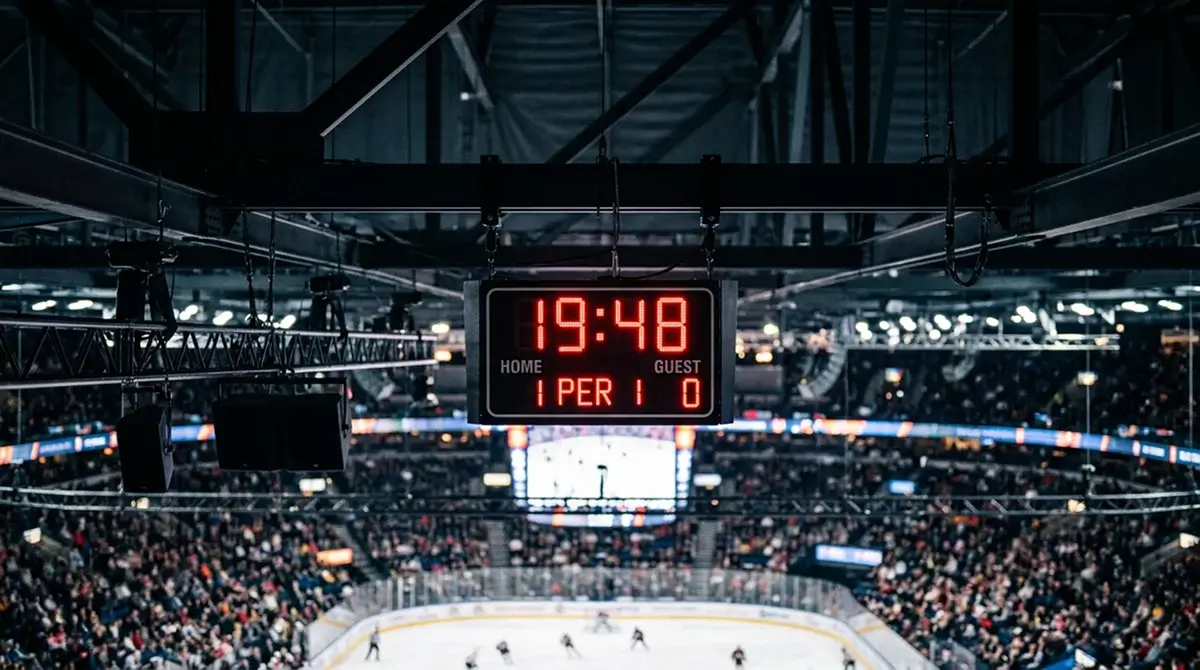
Live 3-way pricing is where the market gets genuinely interesting. A game tied with five minutes left in the third produces a stampede of 3-way tie bets, which moves the tie price from its pre-match 3.80 down to 2.80 or shorter. The implied probability of the tie shoots from 26% to 36% as live punters chase the obvious thesis: “five minutes left, score tied, let’s lock it in.”
This is one of the few hockey live markets where the public’s collective movement tends to overshoot fair value. Five minutes of NHL hockey is enough time for a late goal, particularly with pulled-goalie strategies starting around the 90-second mark for a team trailing by one. The “obvious tie” bet at 2.80 with five minutes left is often worse than the pre-match 3.80 number — because the late-game volatility window has not yet closed.
I rarely take live ties on the basis of a stable scoreline. The better live edge is the opposite: backing one of the regulation winners during the late-game push when the tie market has shortened too aggressively. The 1,271 regular-season NHL games on the calendar (32 teams playing 82 each) give enough late-game data that the empty-net swing is well documented — and it does not stop existing just because the live market has discounted it.

When to choose 3-way over 2-way
The 3-way is the right product when your thesis includes a view on how the game ends, not just who wins. Three patterns dominate my own 3-way ticket log.
First: heavy favourite, expected blowout. If you think a team wins by three goals, the 2-way price is short and the 3-way price is longer. The expected margin makes the regulation tie outcome unlikely to bite, and you collect the plus money for taking a slightly tighter time window.
Second: tight defensive matchup, tie value. Two teams that both grind games into the 2-1 zone produce a tie outcome more often than the market price suggests. Books occasionally let the tie price drift to 4.00 or longer on matchups where the historical hit rate would justify 3.50.
Third: backing the favourite at a moneyline price that feels short. A favourite at 1.45 on the 2-way is a small return on serious risk. The same team at 1.75 on the 3-way carries marginally higher risk (the OT/SO loss path) but a much better stake-to-return ratio. For UK punters who like to compound returns, that swap is often worth the variance trade-up.
What the 3-way is not is a default replacement for the 2-way. It is a focused product. Use it when the thesis fits, not when the price looks bigger.

Reading the 3-way market as a habit
The 3-way moneyline rewards the punter who looks at every NHL game and asks “what happens in regulation?” rather than “who wins?” That extra layer of thought is genuinely tradable. Most punters do not bother, the public action on the 3-way is thin, and the prices reflect a market that has not been sharpened by volume.
The discipline of separating regulation outcome from final outcome — really separating them, not just nodding at the distinction — is what turns the 3-way from a curiosity into a usable product. Once that mental model clicks, the 3-way market becomes the place you look for the cleanest plus money on favourites you would otherwise pass on at 2-way prices.
What share of NHL regular-season games end tied after 60 minutes?
Around 23-26% of NHL regular-season games are tied at the 60-minute buzzer in recent seasons. The exact figure varies year to year with rule tweaks and pace shifts, but the long-run average sits in that band. Playoff hockey shows a slightly higher rate because teams play more cautiously and the 3-on-3 OT format does not apply — playoffs go to 5-on-5 sudden death from the start.
Why is the 3-way tie price often longer than implied probability suggests?
Books price the tie outcome with extra padding because tie bets attract less public action than win bets. With thinner volume to balance against, the book defends the tie price by lengthening it slightly above true probability. The result is a small but consistent edge for punters who take the tie on matchups where the projected pace and goaltending support a defensive grind.
When does the EIHL 3-way market settle differently to NHL?
The EIHL produces ties at a noticeably higher rate than the NHL — closer to 30% in some recent seasons — because the league plays more low-scoring, defensively structured games and OT/shootout formats vary by competition stage. UK books pricing EIHL 3-way often shade the tie price shorter than the historical hit rate would suggest, which makes EIHL ties a thinner edge than NHL ties for value hunters.
Published by the ice Hockey Betting team.