KHL Betting Guide for UK Punters
 Available in US
The first KHL bet I lost was on what I thought was a stone-cold favourite — SKA Saint Petersburg at home against a bottom-table side in a Friday night fixture. They drew through 60 minutes, won the shootout, and my regulation-time pick was already gone. That game taught me more about the Kontinental Hockey League than the next twenty I bet correctly. Russian and Eurasian hockey doesn’t play to NHL templates, and UK bettors who don’t adjust their assumptions before placing a stake tend to find out the hard way.
This guide is for punters who want to bet the KHL seriously: how the league actually works, where the betting markets differ from North American hockey, and the structural quirks that make the difference between a profitable approach and donating to bookmakers.
Table of Contents
- What the KHL Actually Is
- Rule Differences That Affect Your Bets
- Where the Edges Are in KHL Markets
- Reading Russian-Language Sources Without Speaking Russian
- Variance, Sample Size and the Long Season
- Practical Setup for UK Bettors
- What I’d Tell a New KHL Bettor on Day One
- Frequently Asked Questions About KHL Betting
What the KHL Actually Is
The Kontinental Hockey League formed in 2008 as Russia’s answer to the NHL, and it’s grown into the second-strongest professional league in world hockey by talent depth. The 2025-26 season runs with 23 teams across Russia, Belarus, Kazakhstan and China, splitting into Western and Eastern conferences. The regular season runs from September through February, followed by the Gagarin Cup playoffs through April.

The talent ceiling matters when you’re pricing players against North American comparisons. KHL rosters mix Russian internationals who chose to stay home, returning veterans from the NHL, and a steady flow of young talent that the NHL will eventually draft or sign. The level isn’t NHL — game speed and depth are a clear step below — but it’s substantially above the AHL or any European domestic league. For betting purposes, the right mental model is “elite hockey played by a slightly different rulebook,” not “minor league.”
Rule Differences That Affect Your Bets
This is where UK punters lose money out of habit. The KHL plays under IIHF rules with a few quirks, and several of them change how markets settle.
Overtime and shootouts are the obvious one. Regular-season KHL games tied after 60 minutes go to a five-minute three-on-three overtime, followed by a shootout if needed. The result counts in standings but the betting impact depends on how you’ve bet the match. A 3-way moneyline (also called regulation moneyline) settles on the 60-minute scoreline only, treating a tied game as a separate “draw” outcome. A 2-way moneyline includes overtime and the shootout. Mixing these up is the most common KHL betting mistake I see.

Game length is standard at three 20-minute periods, same as the NHL. But shift patterns are different — KHL teams use longer shifts and shorter ice time concentrated on top lines, which affects player props if you’re trying to apply NHL benchmarks. A KHL first-liner can play 22 to 24 minutes a night, well above an NHL counterpart, and that compresses scoring opportunities into fewer skaters.
Officiating leans toward letting play continue. There are fewer power plays per game than the NHL average, which depresses scoring and pushes totals lines lower. Pay attention to that when you’re comparing KHL totals to NHL numbers — a 4.5 in the KHL isn’t the same baseline as a 6.5 in the NHL, but the structural difference is consistent.
Where the Edges Are in KHL Markets
KHL liquidity at UK-facing sportsbooks is thinner than NHL liquidity. That’s a problem for big stakes and an opportunity for smaller bettors who know the league. Books that price KHL often do it from data feeds without dedicated traders, which means errors creep in.
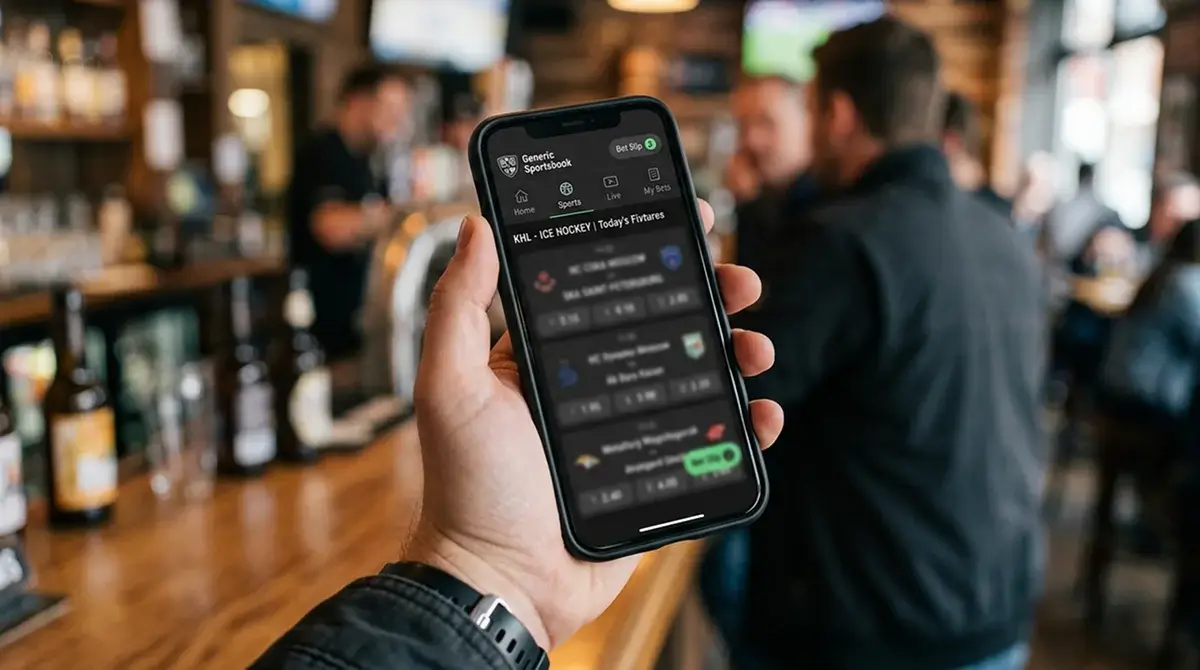
The places I’ve found edges, consistently:
Goaltender start changes are slower to be priced. The 3% to 5% implied probability shift that sportsbooks like Caesars apply to NHL goalie swaps doesn’t always appear cleanly on KHL games, particularly weekday fixtures. If a backup is confirmed starting and the line hasn’t moved, that’s actionable.
Totals on lower-table matchups. The market tends to anchor totals around 4.5 or 5 across the league, but pacing varies more by team than the NHL. Two teams that genuinely play structured, low-event hockey can land well under a 4.5 line that’s been set on league averages rather than the matchup.
Period-specific markets. Russian and Eurasian teams tend to start games more conservatively than North American sides, with scoring concentrated in second and third periods. First-period unders at 1.5 land more often than NHL bettors would expect, particularly in cold-weather venues and afternoon kick-offs.
Where edges are scarce: the top of the table. SKA, CSKA Moscow, Lokomotiv Yaroslavl, Ak Bars Kazan and Metallurg Magnitogorsk are bet on heavily and priced sharply. Trying to find moneyline value on the big clubs is hunting where everyone else is hunting.
Reading Russian-Language Sources Without Speaking Russian
Information access is the practical barrier most UK punters never solve. KHL beat coverage is overwhelmingly in Russian, official team announcements come out on VK before they reach English-language Twitter, and the difference between knowing who’s starting in goal an hour before puck drop versus five minutes before can be the entire edge.

What works for non-Russian speakers: the official KHL website’s English version carries box scores and basic statistics with a slight lag; KHL Network on YouTube uploads condensed games with English commentary; and translation tools handle Russian sports text reasonably well now if you’re willing to scan Twitter accounts of Russian hockey journalists. The most reliable single-source habit I’ve built is checking team Telegram channels — that’s where lineup news breaks first, often hours before the data feeds update.
Statistical depth is also lighter than the NHL. Expected goals data exists for the KHL but the public-facing sources are limited and inconsistent. You won’t find a KHL equivalent to Natural Stat Trick or MoneyPuck with the same coverage. That’s another argument for sticking to markets where line errors are obvious rather than markets where you need fine-grained modelling to find an edge.
Variance, Sample Size and the Long Season
A KHL regular season runs 68 games per team — shorter than the NHL’s 82 but still long enough that variance gets ironed out across a campaign. The Gagarin Cup playoffs use the same best-of-seven format as the Stanley Cup, with rounds running through April. The compressed bracket and the deeper roster gap between top and bottom clubs mean playoff series often end faster than NHL equivalents, which matters if you’re pricing series-length bets.

The Kargel framing from StatsAlt applies cleanly here: winning in hockey requires more than just knowing who’s hot — small edges, timing and context matter more than raw talent. That’s even truer in the KHL, where the gap between elite teams and mid-table sides is wider than the NHL but where individual game variance still produces upsets that the price doesn’t anticipate. Sample-size discipline is the only protection against confusing a hot run with a real read.
Practical Setup for UK Bettors
UK punters can bet KHL through UKGC-licensed sportsbooks that carry European and Asian hockey. Market depth varies enormously — some books offer only 2-way moneylines and totals on top games, others run a fuller card with period-specific and player-prop markets. Shop around before settling on a primary book for KHL, because the difference between a sharp KHL price and a recreational one can be ten cents of value on the same match.
Time zones matter. KHL games are scheduled across Moscow, Ekaterinburg and Asian time zones, which means UK punters see most fixtures in the late afternoon or early evening GMT. Weekend matinees in the UK are KHL evening games, which is usually when liquidity is healthiest.

For bettors who like multi-league diversification across hockey, the KHL also pairs well as a value contrast to the NHL — different schedule cadence, different stylistic baselines, different pricing efficiency. The same approach that works for hockey over under totals betting applies here with adjusted thresholds. Don’t import NHL numbers; recalibrate to KHL norms.
What I’d Tell a New KHL Bettor on Day One
Pick one or two markets and stay narrow until you’ve watched enough games to have a real read. Goaltender markets and team totals are where most UK punters with KHL knowledge can find sustainable angles. Don’t bet futures or division winners until you’ve seen at least half a season, because the storylines that drive those markets — coaching changes, mid-season trades, international tournament breaks — don’t always travel through English-language coverage cleanly.
The KHL rewards patience and punishes assumptions. Treat it as its own league, learn its rhythms, and accept that your first season is mostly tuition. Every serious KHL bettor I know started by losing on hockey they thought they understood.
Frequently Asked Questions About KHL Betting
Is KHL betting legal in the UK?
Yes, through UKGC-licensed sportsbooks that offer KHL markets. Market availability varies between operators, with some providing only top-tier games and others offering fuller coverage including player props.
How does KHL betting differ from NHL betting?
Lower-scoring league averages, slower-priced goaltender changes, thinner liquidity on niche markets, and different overtime/shootout settlement rules depending on whether you bet 2-way or 3-way moneyline. NHL benchmarks should not be imported directly.
When is the best time to bet KHL games?
Weekend matinees in the UK correspond to KHL evening fixtures with the healthiest liquidity. Weekday afternoon games often have thinner pricing and slower line responses, which can be either opportunity or risk depending on your information access.
Created by the ”ice Hockey Betting” editorial team.