
Line Movement and Sharp Money in NHL Markets
 Available in US
Reading the lines as a conversation
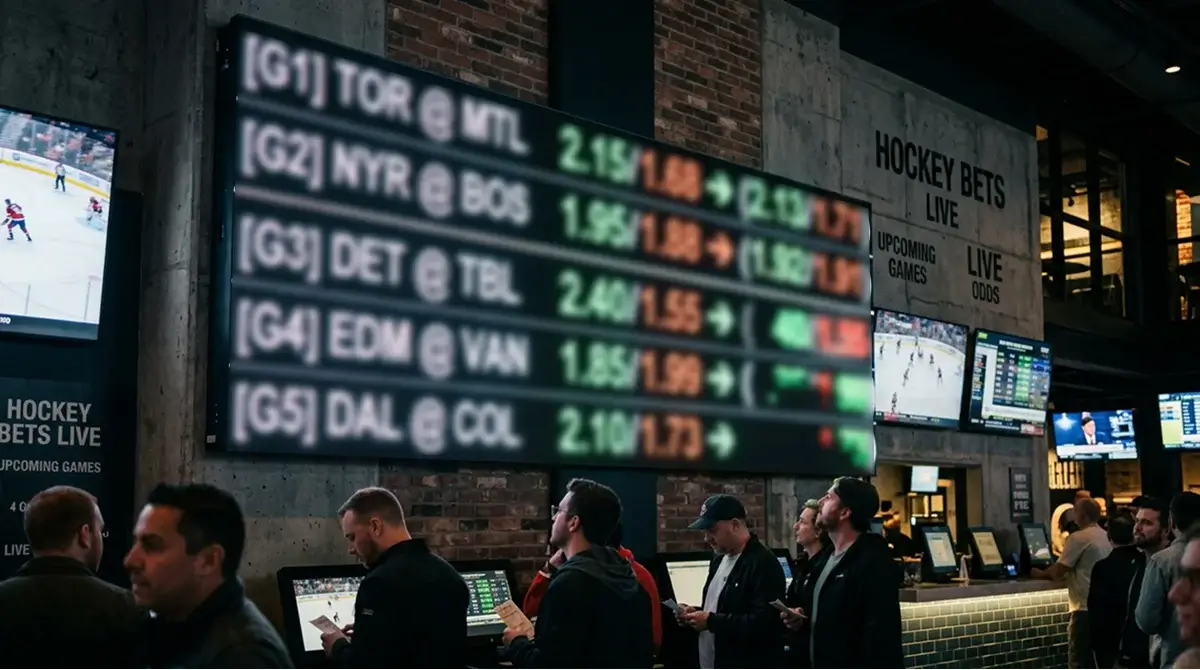
Every NHL line you see on a UK sportsbook app is a conversation. The book opens at a number, the market responds, the book adjusts, the market responds again, and by puck drop the closing line reflects the collective view of every actor with money in the game. Learning to read that conversation — to recognise which moves are public chasing favourites and which are sharp action signalling something specific — is one of the higher-skill applications of NHL betting.
Nine years of watching NHL lines move has taught me that most line movement is noise and a meaningful fraction is signal. The skill is in telling them apart. Steam moves driven by sharp syndicate action look different from public-driven drift, and the punter who recognises the difference can position around it. The punter who treats all movement as equally meaningful gets whipsawed.
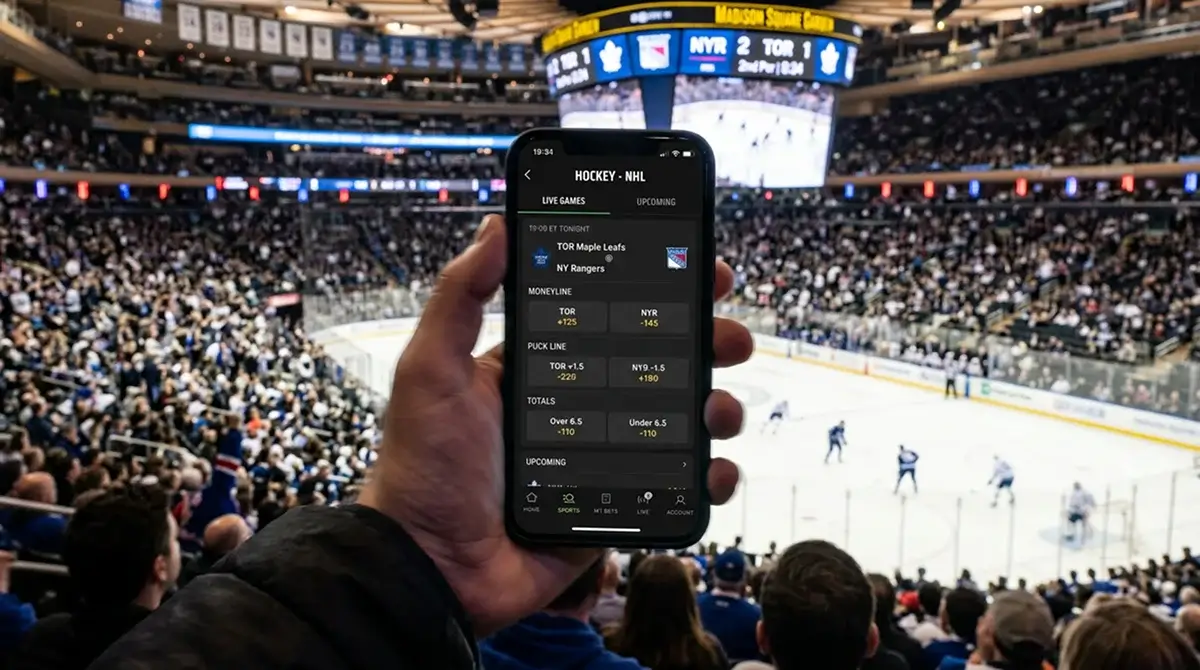
This guide covers the arc from opener to closer, how to read reverse line movement, steam and syndicate action, the gap between public narratives and price, and why closing line value matters as a long-term edge metric for UK punters.
The arc from opener to closer
NHL lines typically open 24-48 hours before puck drop on most UK books, with some operators opening even earlier on marquee matchups. The opener is the book’s initial estimate — derived from model output, with manual adjustments for known variables like confirmed starters and back-to-back fatigue. From there, the line moves as money comes in and as new information lands.
The typical move pattern on a competitive NHL game: the line drifts slightly toward the public favourite in the early hours after opening, as casual money piles on the more recognisable team. Then around six to twelve hours before puck drop, sharp action begins to enter the market, often moving the line in the opposite direction. Final adjustments happen in the warm-up window as goalie confirmations land and any late injury news appears.
The 2025 calendar-year handle data for US regulated sportsbooks tells the structural story. Total handle reached $165.58 billion across the year, with gross revenue of $16.80 billion and an average hold of 10.15% — but in-play wagering accounted for more than 60% of that volume. The dominance of live betting has changed how books price pre-match lines: they can afford slightly tighter pre-match juice because the live market will provide additional balancing opportunity post-puck-drop. The opener-to-closer arc has tightened as a result, with sharper opening lines and smaller closing-line moves on most games.
Reverse line movement as a signal
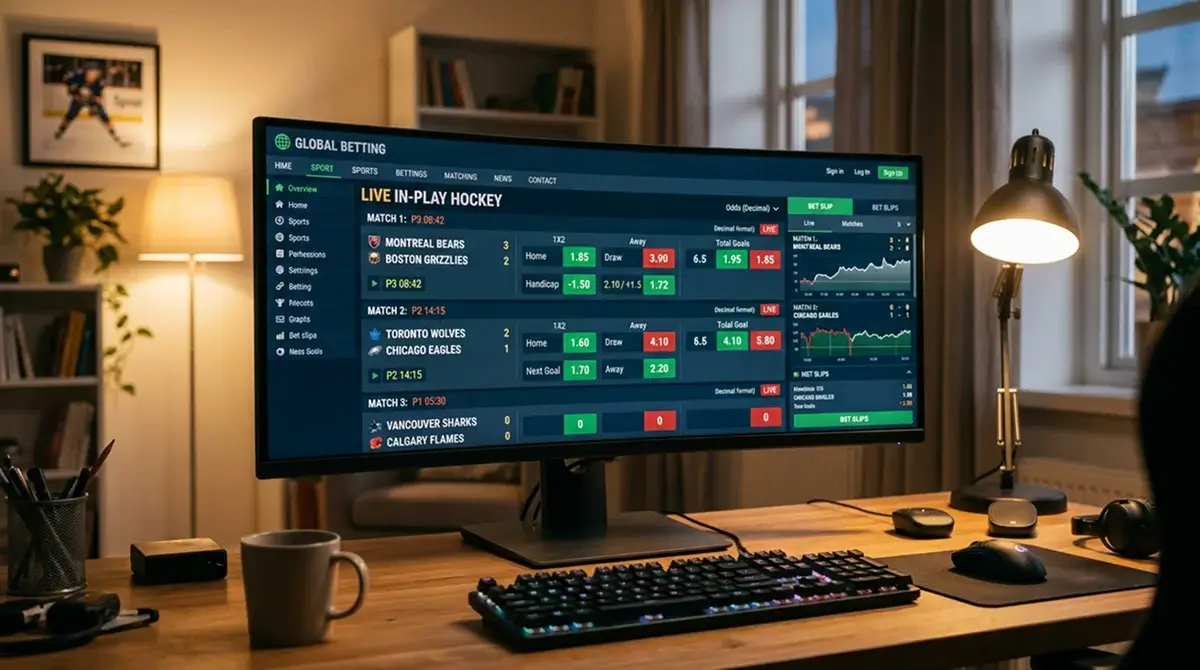
Reverse line movement is the cleanest sharp action signal available to public observers. The pattern: a heavy majority of public bets goes on one side (the favourite, typically), but the line moves toward the other side anyway. The implication is that the bets coming in against the public majority are larger in stake size — sharp action that the book respects enough to move the line, even at the cost of imbalanced ticket counts.
Recognising reverse line movement requires data on bet distribution as well as line movement. Some UK-licensed sportsbooks publish their own bet-percentage data, and several public sites aggregate this across multiple books. The data is not perfect — books selectively report — but it is enough to identify the obvious cases where the line is moving against the public majority.
The practical use: reverse line movement is a confirmation signal rather than a primary thesis. If your own model has flagged the underdog as value, and the line is moving toward the underdog despite public money on the favourite, the sharp consensus is aligned with your view. That alignment increases confidence. If your own model disagrees with where the sharp action is going, that is a moment to re-check your inputs before placing the bet.
Steam and syndicate action
Steam moves are abrupt, simultaneous price movements across multiple sportsbooks driven by sharp syndicate action. A steam move on an NHL total looks like this: the over price drops from 1.95 to 1.83 at one book, and within 30-90 seconds the same move propagates across most of the major UK and international books. The synchronicity is the giveaway — natural public action does not move all books at the same time.

The trigger for steam is usually one of three things: a piece of breaking news that has not yet reached the public (a confirmed lineup change, a starting goalie reversal, a late scratch), a sharp syndicate executing a planned bet across multiple books simultaneously to maximise stake before the line tightens, or a respected sharp player placing a large stake that the book interprets as informed action.
For UK punters, steam moves matter because they typically signal information that the public market has not yet priced. If you have a position before steam hits, you have either caught a value price or you are about to find out that your position was wrong for reasons the sharps already knew. Either way, the move tells you something about the underlying matchup that pre-steam pricing did not reflect.
Public narratives versus the price
The most dangerous force in NHL betting is the public narrative. “Team X is hot” — they have won six straight, the media is talking them up, the casual punter is betting them blindly. The line drifts in their favour, the price compresses, and by the time the average UK punter places the bet, the value is gone — sometimes the value is genuinely negative because the public has overcorrected.

Kyle Kargel at StatsAlt put the right framing on this: “Winning in hockey requires more than just knowing who’s hot or who won their last game. The NHL is a high-variance league where small edges, timing, and context often matter more than raw talent.” That is exactly the principle that fades public narratives. The team that has won six straight is no more likely to win the seventh than their underlying performance metrics suggest, but the public’s enthusiasm pushes the price beyond what the data supports.
The discipline is to identify when the line has moved beyond the model — when the closing price implies a probability higher than your own analysis estimates. That is the moment to fade the public side or pass on the bet entirely. Chasing the public narrative is the easy bet that the market punishes most reliably.
Closing line value as the edge metric
Closing line value (CLV) is the single most respected long-term metric in sports betting. The idea: the closing line is the market’s most informed estimate of the true probability at puck drop. If you consistently place bets at prices longer than the closing line on the same side, you are buying value relative to the most accurate available estimate of fair price. Over a long sample, positive CLV correlates strongly with positive expected return.
For UK punters, CLV tracking is the simplest record-keeping discipline that genuinely improves performance. After each bet, note the closing line on the same side at the same book. Compare your entry price to the closing price. A 2.10 entry on a line that closed at 1.95 is +CLV; a 1.85 entry on a line that closed at 2.05 is -CLV. Over 100 bets, the average CLV is a more reliable predictor of long-term profitability than win-rate is.

The relationship between CLV and value betting is direct: a punter consistently capturing positive CLV is, by definition, betting at prices the market eventually disagrees with — that is the definition of betting against the market consensus profitably. For the broader framework of how value betting fits into a disciplined NHL approach, see the NHL value betting guide.
The £2.6 billion in online sports betting GGY across UK regulated sportsbooks for the financial year ending March 2025 includes hockey as a small slice of the action, but the same CLV principles apply across all markets. UK punters who track CLV across their full betting portfolio — football, hockey, golf, whatever — develop a more honest read on which markets they are genuinely beating and which they should walk away from.
The honest read of line movement
Reading line movement well is a slow skill. It requires patience to recognise patterns over many games, discipline to record what you saw and what happened, and humility to admit when your reads were wrong. The reward is a more informed view of every NHL ticket you place — knowing not just the price you got, but how that price relates to the wider market’s evolving estimate.
The single habit that compounds best: track closing line value on every bet, no exceptions. Over a season of NHL betting, the CLV number tells you more about your own edge than any other single metric. Positive CLV across hundreds of bets is the cleanest evidence of a real edge; negative CLV is the cleanest evidence that you are losing to the market regardless of short-run results.
How quickly does a steam move propagate across UK sportsbooks?
A genuine steam move typically propagates across the major UK sportsbooks within 30-90 seconds. The first book to move is usually the most informed or the one targeted by the sharp action; the others follow as their risk systems flag the imbalance. Smaller UK operators sometimes lag by several minutes, which creates brief windows where their prices reflect pre-steam conditions even though the broader market has already moved.
Is closing line value a reliable proxy for a UK NHL bettor’s long-term edge?
Yes, more reliable than win rate over equivalent sample sizes. Closing line value measures whether your entry price is consistently better than the market’s most informed final estimate, which is the closest available proxy for true probability. A punter with positive CLV across 200+ bets is statistically very likely to be a long-term winner, even if their short-run win rate is unimpressive. Negative CLV is the inverse warning signal — high win rates with negative CLV usually do not survive variance over longer samples.
Why do some NHL markets see line movement without obvious news?
The most common cause is sharp action arriving in concentrated form — a syndicate executing a planned bet, or a respected individual sharp placing a large stake. The book moves the line in response to the imbalance even when there has been no public news event. Less common causes include internal model recalibration (the book updating its own pricing assumptions across multiple games at once) and risk-balancing moves where the book shifts the line to encourage action on the other side of an exposed position.
Created by the ”ice Hockey Betting” editorial team.