Olympic Ice Hockey Betting Guide
 Available in US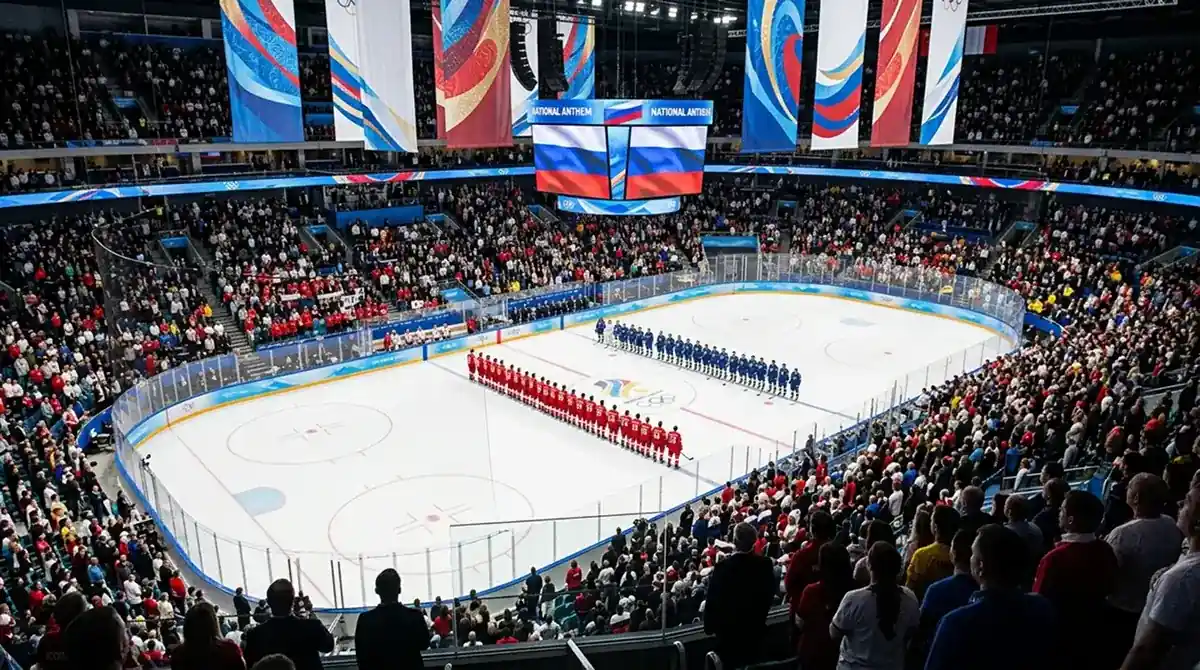
The 2026 Milano-Cortina Winter Olympics will be the first Olympic ice hockey tournament with NHL players since 2014. That’s twelve years of pent-up best-on-best demand crashing into a betting market that hasn’t priced Olympic men’s hockey at full strength in over a decade. The 2018 PyeongChang and 2022 Beijing Games featured non-NHL rosters, which makes any historical pricing reference essentially meaningless. The Milano-Cortina tournament is, for betting purposes, the first of its kind in a generation.
This guide is for UK punters preparing to bet the Olympic tournament with full understanding of what’s different from regular hockey, what’s different from the IIHF Worlds and 4 Nations, and where the structural pricing gaps will likely appear.
Table of Contents
- What Olympic Hockey Looks Like With NHL Players
- Format-Specific Pricing Considerations
- How Olympic Hockey Differs from the 4 Nations
- The Futures Market
- Group Stage Markets
- Medal Round Markets
- Information Sources and Tournament Cadence
- Setting Expectations for the Tournament
- What Milano-Cortina 2026 Means for the Future of Olympic Hockey Betting
- Frequently Asked Questions About Olympic Hockey Betting
What Olympic Hockey Looks Like With NHL Players
The men’s Olympic ice hockey tournament at Milano-Cortina 2026 will feature 12 nations split into three groups of four for the preliminary round, followed by a qualification round, quarterfinals, semifinals, and bronze and gold medal games. The full bracket runs over roughly two weeks within the broader Olympic schedule.
The talent pool is the headline. NHL players whose teams release them for the tournament — which they have agreed to do for 2026 — will fill the rosters of Canada, the United States, Sweden, Finland, Czechia, Germany and other major hockey nations. This produces a roster strength comparable to the 2010 Vancouver and 2014 Sochi Olympics, both of which featured full NHL participation and produced some of the most memorable hockey of the past two decades.

For betting markets, this means the IIHF rules pre-NHL-return era — 2018 PyeongChang totals patterns, for example — should be discarded as reference data. The relevant comparisons are the 2014 Sochi tournament and the 2025 4 Nations Face-Off, both of which featured best-on-best NHL talent under tournament conditions. Those are your nearest analogues for pricing expectations.
Format-Specific Pricing Considerations
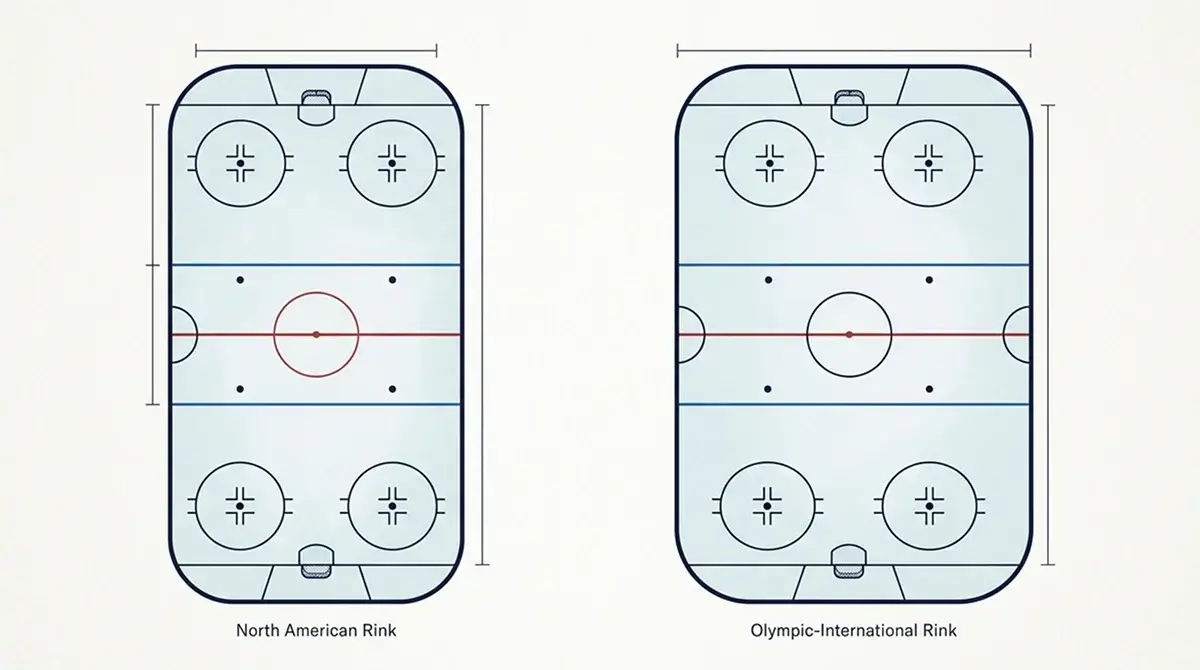
Olympic hockey uses IIHF rules with the international ice surface being slightly wider than NHL rinks, though many modern Olympic venues now use NHL-spec rinks. Milano-Cortina is expected to use NHL-dimension ice based on venue specifications, which removes one of the historic variables that affected Olympic scoring patterns.
What stays the same: 20-minute periods, overtime and shootout rules different from NHL regular-season standards, and the single-game elimination format from the quarterfinals onward. Settlement on parlays involving Olympic games can be tricky because period-by-period markets and overtime markets settle differently from NHL conventions. Always check before stacking bets.
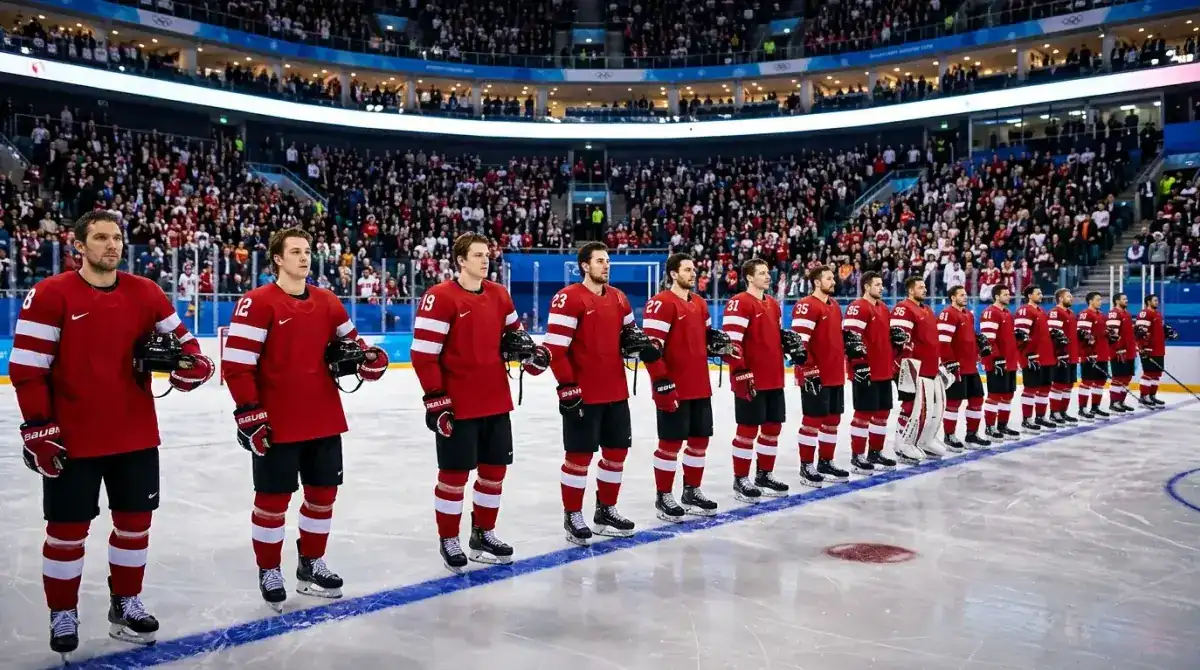
The group-stage format produces three games per team before knockout. The top team in each group plus the next best teams advance directly to the quarterfinals, with intermediate teams playing a qualification round. This structure means group-stage moneylines on stronger nations against weaker opponents often see lines as wide as -2000, which puts them outside practical betting range. The accessible value lives in matchup pairings between similar-quality nations and in totals markets where the goal expectation gap can be wider than the price reflects.
How Olympic Hockey Differs from the 4 Nations
The 4 Nations Face-Off in February 2025 was the closest recent analogue to what 2026 Olympic hockey will look like, but several structural differences matter for pricing.
First, field size. The Olympics include 12 nations, the 4 Nations included four. That difference produces more mismatched group-stage games at the Olympics and more variance in path-to-medal. Tournament-winner futures should reflect both the higher absolute talent on the strongest rosters and the wider variance in knockout-round pairings.
Second, time of year. The Olympics happen in February, similar to the 4 Nations, but in the middle of the NHL season’s most demanding stretch. Player fatigue is real. The NHL pauses for the Olympics, so players arrive rested from immediate game pressure, but the season’s accumulated wear is in the rosters. Goaltenders particularly carry this — a goalie playing his 45th game of the NHL season is not the same goalie who was fresh in October.
Third, stakes. Olympic medals carry weight that 4 Nations medals don’t, particularly for European nations whose hockey identity is wrapped up in Olympic performance. That changes how teams play, how coaches manage rosters, and how medal-round games unfold tactically. Expect more defensive structure and lower scoring in medal-round Olympic games than in equivalent 4 Nations matchups.
The Futures Market
Olympic men’s hockey gold medal futures are typically the most heavily-bet futures market in winter sports. Canada and the United States open as co-favourites by default, with Sweden, Finland, Czechia and Russia historically the next tier. The 2026 tournament’s Russia participation status will need confirmation closer to the event, which could meaningfully reshape the futures market.
Pre-tournament futures pricing tends to be sharp on the top two or three contenders and softer on the field. Where I’ll be looking for value: nations like Czechia, Switzerland or Germany whose probability of reaching the medal round is higher than the futures odds suggest. The medal-round path matters more than absolute talent in single-elimination tournaments — a team that draws favourable quarterfinal opponents has a meaningfully better gold medal probability than a team facing a tougher bracket, and futures pricing doesn’t always weight bracket considerations carefully.
The market timing for Olympic futures is also worth thinking about. Opening lines tend to appear months before the tournament, with significant movement as confirmed rosters drop. Late pricing — within two weeks of the tournament — incorporates more information but offers less time for the market to misprice surprise news. Most of my Olympic futures value historically has come from early bets on second-tier contenders, taken before the public hype settles the market on the obvious favourites.

Group Stage Markets
Olympic group-stage betting offers two main categories of value: pricing inefficiencies on mismatched fixtures and goaltender markets on rotation games.
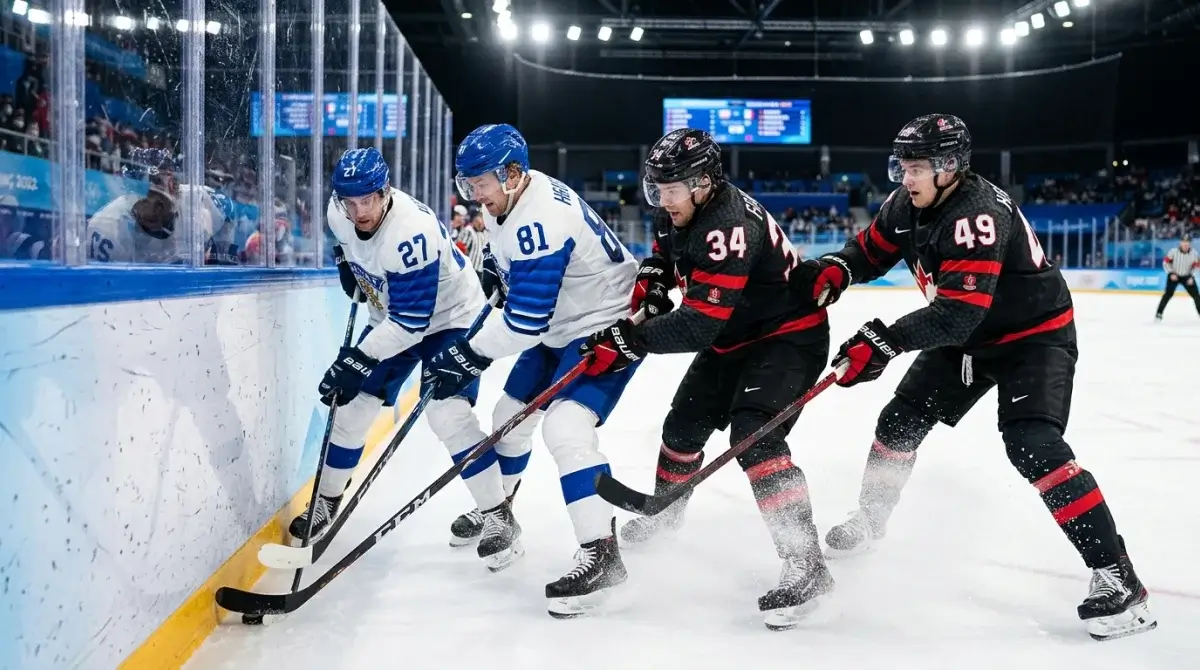
On mismatches, puck-line markets are usually more accessible than moneylines. A Canada vs Slovakia group-stage game might have Canada at -1200 on the moneyline but offer interesting prices on the puck line at -2.5 or -3.5. The talent gap is real, but Olympic group-stage games against weaker opposition sometimes feature lineup rotation and conservative tactics that limit the actual goal margin. The principles behind puck line betting apply with extra weight here because the spreads are wider than typical NHL puck lines.
On goaltender rotations, nations often rotate their two starters through group-stage games to assess form ahead of medal-round decisions. The 3% to 5% implied probability shift documented on NHL starting-goalie changes operates similarly at the Olympics but with the same complication noted in 4 Nations and Worlds betting — both starters are typically NHL-quality goaltenders, so the gap between rotation options is smaller than a typical NHL starter-to-backup change.
Medal Round Markets
Olympic medal-round hockey is its own betting category. Single-elimination quarterfinals, semifinals, bronze and gold medal games — every match is a one-off with no series structure to balance variance. Pricing on these games tightens dramatically. The favourite is usually shaded narrower than the absolute talent gap suggests, partly because tournament hockey compresses outcomes through defensive structure.
What I’ll be watching for in 2026 medal-round games: totals lines that have shaded down further than the talent and venue conditions justify. Olympic medal-round games can produce 1-0 and 2-1 finals, but the public’s appetite for goals often holds totals lines artificially high relative to the actual goal distribution in single-elimination tournament hockey. Unders on knockout games involving structured European defensive teams have been profitable historically.
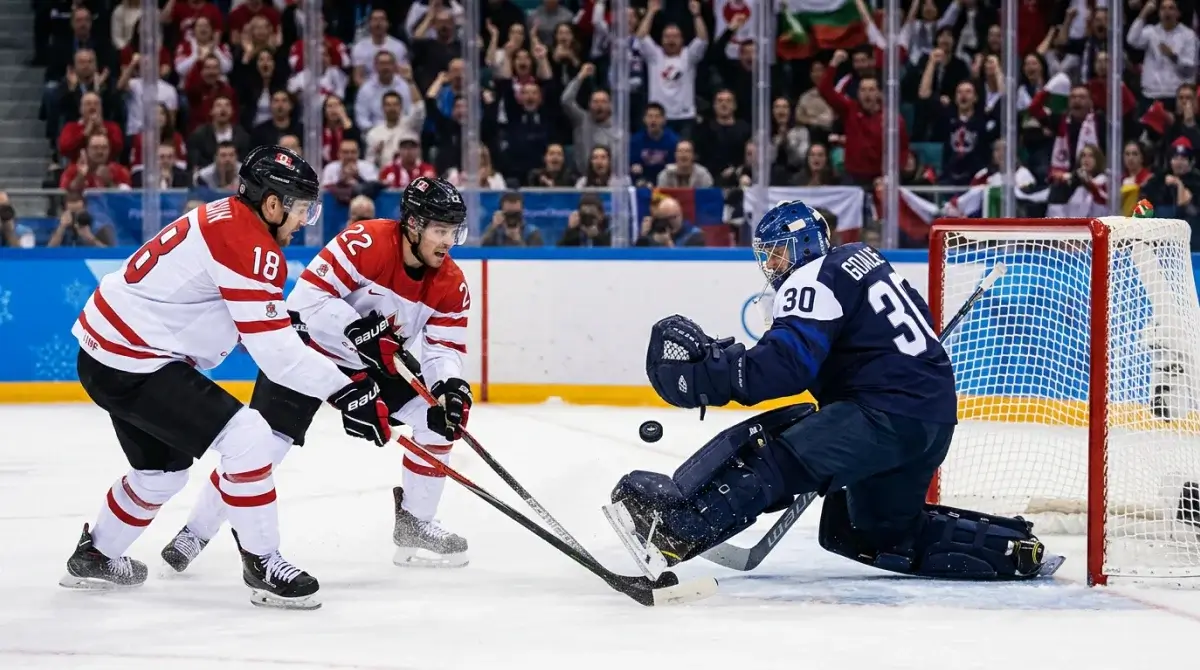
Moneyline value in medal rounds is harder to find. The lines are sharply priced and the variance is high enough that even a strong read can lose on a single bounce. Bet smaller, accept that medal-round results are partly random, and don’t over-extrapolate from individual game outcomes.
Information Sources and Tournament Cadence
Olympic coverage in English is extensive. The IIHF carries match centres and statistics, major broadcasters provide English-language commentary, and the tournament gets attention from international hockey media that runs through the IIHF Worlds and 4 Nations as well. The information density during the Olympic fortnight is higher than at any other hockey tournament.
The challenge is filtering signal from noise. Olympic hockey gets covered by general sports journalists who don’t always understand the sport’s nuances, and the analytical depth available for individual games can be thinner than for NHL fixtures despite the higher overall coverage volume. Stick to hockey-specific sources — dedicated international hockey writers, team national federation channels, and the IIHF’s own information feed — for the actual decision-making.

Time zone management matters for 2026. Milano-Cortina is on Central European Time, which puts game times in convenient afternoon and evening slots for UK bettors. The full tournament schedule should be available well in advance, allowing for planning of which fixtures to actually bet rather than betting everything that’s available.
Setting Expectations for the Tournament
Olympic men’s hockey at full NHL strength is some of the best hockey ever played, but it’s also some of the highest-variance hockey for betting purposes. Two weeks of tournament play produces a champion through a combination of skill, scheduling, goaltending and bounces. The bettor who treats each game as a discrete profit opportunity and the tournament as a series of independent decisions will do better than the bettor who tries to ride emotional waves with the host nation or pre-tournament favourites.
Plan your tournament bankroll in advance. Allocate a specific amount you’re willing to lose across the entire event. Size each bet conservatively. Track your results. The Olympics happen rarely enough that they should be treated as a special betting event with discipline, not a chance to bet bigger because the stakes feel bigger.
What Milano-Cortina 2026 Means for the Future of Olympic Hockey Betting
If NHL participation continues beyond 2026, the Olympics will become a regular fixture in the global hockey betting calendar, with pricing efficiency improving across each tournament. The 2026 Games will be a learning opportunity for bookmakers and bettors alike — the pricing in the first week will likely be the softest, with sharpness improving as the field shakes out. Bettors who pay close attention and act on confirmed information rather than pre-tournament narrative will find the most value in those early days.
Frequently Asked Questions About Olympic Hockey Betting
Yes, NHL players are confirmed for the 2026 Olympic men’s hockey tournament. This is the first Olympic ice hockey event since 2014 to feature full NHL participation, with the league pausing its season to accommodate the tournament. Single-elimination format from quarterfinals onward, IIHF rules with international officiating standards, structured defensive tournament hockey that produces lower scoring than typical NHL games, and roster construction based on national eligibility rather than club performance. Each factor affects how lines should be priced. Early futures markets often offer better value on second-tier contenders before public hype settles the market on top favourites. Late markets within two weeks of the tournament incorporate more information but provide less time for value to materialise. The optimal window varies by bet type and risk tolerance.Will NHL players participate in the 2026 Milano-Cortina Olympics?
How does Olympic hockey betting differ from NHL betting?
When should UK punters bet Olympic hockey futures?
Published by the ice Hockey Betting team.